Which Visual Novel Anime Adaptations Should You Watch?
The easiest way to start with visual novel anime adaptations is to pick a show that works as a complete anime first, not the one with the most complicated source material. Steins;Gate is the safest first choice for most viewers, while Clannad, Higurashi, Fate/stay night, White Album 2, and Kanon make more sense depending on whether you want drama, horror, action, romance, or something slower and moodier.
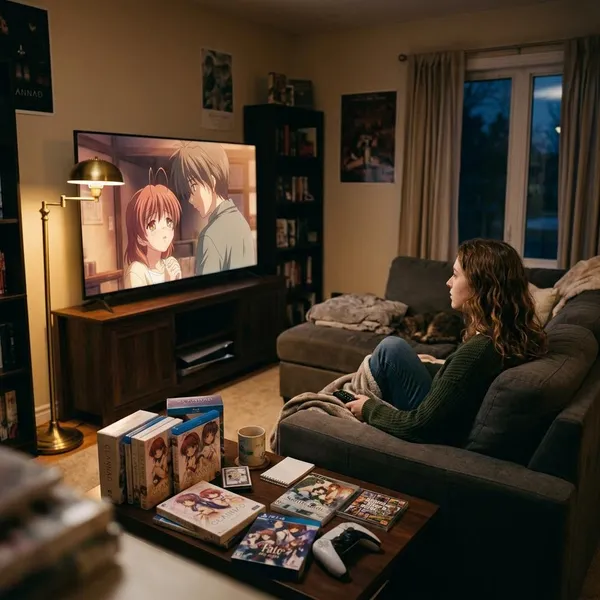
Best visual novel anime adaptations
A good visual novel adaptation does not have to copy every route. It needs a strong central path, characters whose choices still make sense without game narration, and an ending that feels earned. For a first watch, avoid choosing only by popularity. Match the title to the kind of story you already enjoy.
Steins;Gate for sci-fi and suspense
Steins;Gate is the best all-round starting point because it has a clear hook: odd experiments, time travel, consequences, and a protagonist who becomes more vulnerable as the plot tightens. It begins slowly, but that early time with the cast matters later.
Clannad and After Story for emotional drama
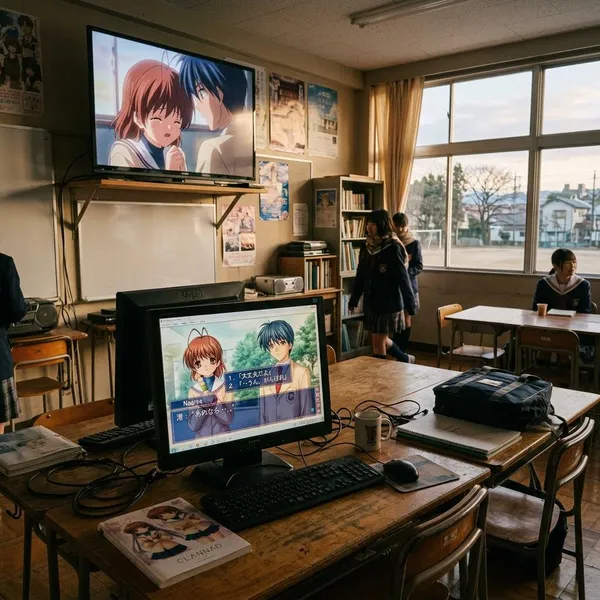
Clannad works best for viewers who are willing to sit with school-life comedy and character episodes before the heavier material arrives. The first season builds attachments; After Story turns that groundwork into a story about adulthood, family, grief, and responsibility.
The trade-off is obvious: several heroine routes are compressed. Still, Tomoya's emotional arc remains easy to follow, which is why the anime is still recommended so often. If you want a short, fast drama, this is not the neatest pick. If you want a long emotional build, it is one of the strongest.
Higurashi for horror and mystery
Higurashi: When They Cry is the better choice if romance-focused visual novels do not appeal to you. Its repeating arcs, paranoia, violent shifts in tone, and village secrets make it feel closer to psychological horror than a typical school drama.
Fate/stay night for fantasy action
Fate/stay night is hugely influential, but it is not the cleanest beginner franchise because its main routes have separate anime versions. The appeal is easy to understand: heroic spirits, magical contracts, moral conflict, and large-scale battles. The confusing part is choosing where to start.
- Unlimited Blade Works: the most common action-friendly entry.
- Heaven's Feel: darker and more route-specific, better after some context.
- The 2006 anime: historically important, but less often recommended as the first modern watch.
White Album 2 for relationship drama
White Album 2 is for viewers who want romance to feel uncomfortable, messy, and emotionally consequential. It focuses on a tight love triangle rather than a wide cast of routes, so the anime has room to make silences, hesitation, and bad timing matter.
Kanon for supernatural romance
Kanon, especially the 2006 version, is worth watching if you like older Key-style stories: winter atmosphere, gentle melancholy, supernatural hints, and emotional heroine arcs. It feels more old-fashioned than Steins;Gate or White Album 2, but that slower mood is part of its identity.
How visual novels change in anime
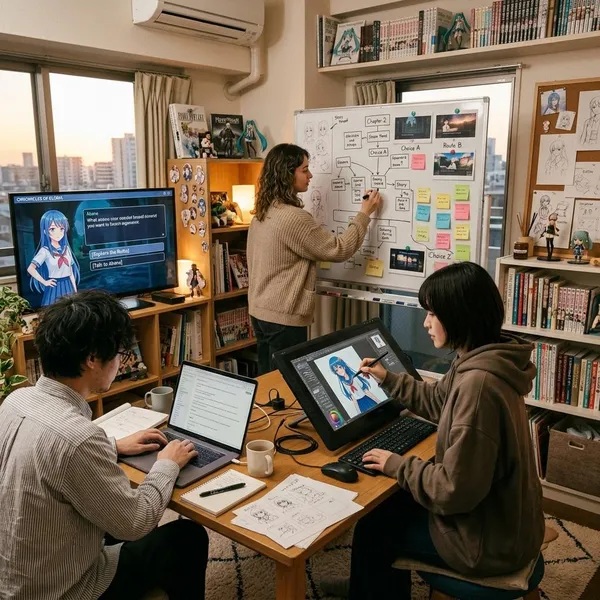
Visual novels are built for choice, time, and inner narration. Anime is fixed, shorter, and more visual. That means even a faithful adaptation has to decide what becomes the main path and what gets reduced. Knowing that before you start makes some "missing route" complaints easier to understand.
Multiple routes get merged
Many visual novels have separate heroine routes or branching story paths, but anime usually needs one continuous version of events. When merging works, supporting characters still get meaningful moments without pulling the story away from its emotional center. Clannad is a good example because it uses route material while still moving toward Tomoya's main arc.
Side routes get shortened
Side routes are usually the first thing to shrink. A visual novel can spend hours on a secondary character; an anime may only have one episode or a few scenes. That is not automatically a flaw, but it changes what kind of viewer will be satisfied.
- Anime-only viewer: often benefits from the tighter pace.
- Source reader: more likely to notice missing buildup.
- Beginner: should prioritize whether the main story feels complete.
Inner thoughts get reduced
Visual novels often live inside the protagonist's head. Anime has to replace that with voice acting, framing, expressions, timing, and dialogue. If the direction is strong, the character still feels layered. If not, a thoughtful lead can suddenly seem passive or bland.
Steins;Gate handles this better than many adaptations because Okabe's personality is visible on the surface: performance, habits, jokes, panic, and overcompensation all carry information that a quieter protagonist might lose.
One ending gets more focus
Anime usually commits to one main ending because trying to honor every route can make the story feel scattered. This is often good for pacing: the viewer gets a clear destination, and the final arc can build with purpose.
The cost is that someone's favorite route may not be the chosen one. A strong adaptation makes that compromise feel acceptable by choosing the ending that best fits the anime's themes, not just the most popular path from the game.
What makes a good visual novel adaptation?
The best adaptations are not always the most literal ones. A scene-by-scene version can still fail if it feels flat, rushed, or emotionally thin. What matters more is whether the anime preserves the reason people cared about the original: the central conflict, the cast, the mood, and the final emotional hit.
Strong core story
A visual novel needs a core story that survives after choices are removed. Steins;Gate has that advantage because its time-travel conflict, escalating stakes, and emotional cost remain compelling in a linear format. If an adaptation only works when you already know the game's hidden structure, it is a weaker recommendation for beginners.
Clear character arcs
Character change has to be visible on screen. The viewer should be able to point to what a character wants, what changes them, and why their final choice matters. This is especially important when the anime has cut inner monologues or shortened route-specific scenes.
Smooth route compression
Good compression makes scenes do more than one job. A single scene might reveal a character's fear, push the romance forward, and set up a later consequence. Bad compression skips the connective tissue, so a breakdown, confession, or plot twist arrives before the viewer has enough reason to care.
Satisfying emotional payoff
The ending does not need to please every source reader, but it should feel like the anime was always moving toward it. White Album 2 is a useful example because its impact comes from accumulated tension rather than a random shock. The best payoff leaves you feeling the adaptation made a real choice, not that it ran out of episodes.
How to choose a visual novel anime
Start with fit, then check complexity. A famous adaptation can still be the wrong first watch if it belongs to a genre you rarely enjoy or comes with too much franchise homework. The most useful first pick is one that gives you a complete-feeling experience without asking you to study the source material first.
Start with your favorite genre
Genre is the quickest filter because it tells you what kind of patience the show will ask from you. A horror fan can tolerate Higurashi being cryptic because the dread is the point. A sci-fi fan is more likely to forgive Steins;Gate for starting slowly because the timeline puzzle promises a payoff.
Check if the story feels complete
For a first watch, completeness matters more than perfect fidelity. A show can cut routes and still feel satisfying if it has a clear beginning, middle, and end. A more "accurate" adaptation that stops before the payoff may be less rewarding unless you already plan to play the visual novel.
Choose simpler franchises first
If you are new to visual novel anime, pick something with fewer watch-order decisions. Steins;Gate, White Album 2, and Kanon are easier to approach than a franchise like Fate, where different routes and spin-offs can make the starting point feel like homework.
This does not mean complex franchises are worse. They are just better once you already understand that visual novel adaptations often represent one path, not the entire source.
Look for strong anime-only appeal
A strong anime-only adaptation should not make you feel punished for skipping the game. The pacing should make sense, the characters should land, and the ending should leave you with a real impression rather than a list of unanswered route questions.
For most people, that means starting with Steins;Gate. For a viewer who mainly wants emotional drama, Clannad is the better first step. For someone who dislikes school romance but loves unsettling mysteries, Higurashi is a smarter choice than forcing a more "standard" recommendation.
Conclusion
The best starting point is the adaptation that matches your taste and still feels complete without homework. Steins;Gate is the safest general pick, Clannad is the stronger emotional commitment, Higurashi fits horror fans, and Fate/stay night is best saved for when you are comfortable with route-based franchises. If the anime gives you a strong core story and a payoff that lands, it has done the most important job of adapting a visual novel.
FAQS
Are visual novels the same as light novels?
No. Visual novels are interactive games with text, art, sound, and often choices or routes. Light novels are prose books, usually with a fixed story and occasional illustrations.
Is Steins;Gate based on a visual novel?
Yes. Steins;Gate comes from a visual novel, and the anime is popular because it keeps the main suspense and emotional arc understandable for viewers who never played it.
Do visual novel anime follow one route?
Often, yes. Some follow one main route, while others merge scenes from several routes into a single anime storyline. That is why certain characters may feel less developed than they do in the game.