Which Anime Explore Creating Visual Novels?
The closest match for an anime about making a visual novel is Saekano: How to Raise a Boring Girlfriend. It is not just a show adapted from game culture; its main story follows a small team trying to create a dating sim. If you want the game-making side more than the romance alone, start there, then consider 16bit Sensation as a related pick.
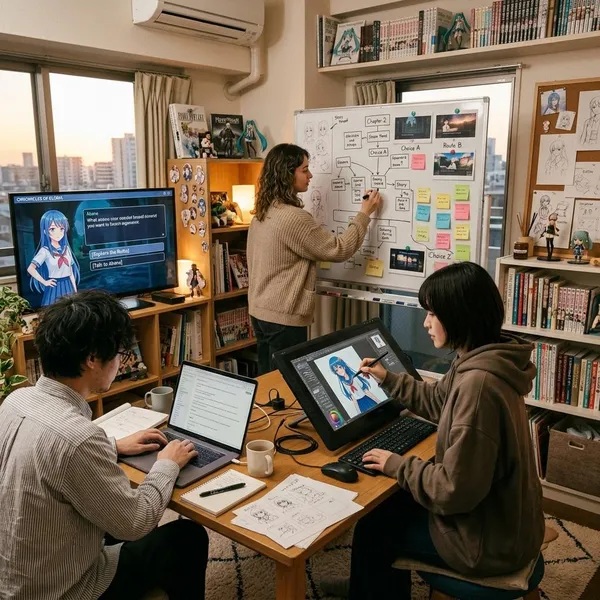
What is the anime about making a visual novel?
Saekano: How to Raise a Boring Girlfriend is the clearest answer because the characters are actively making a romance game rather than simply living inside a story that came from a visual novel. That distinction is useful: many popular anime have visual novel origins, but only a small number show the creative work behind that kind of game.
If your goal is to watch creators build a project, Saekano fits better than titles such as Clannad, Steins;Gate, or Fate/stay night. Those are connected to visual novels, but they are not mainly about planning routes, writing scenarios, designing heroines, or keeping a team on schedule.
Saekano is the best-known match
Saekano follows Tomoya Aki as he gathers classmates with different creative skills to make a dating sim. That gives the show a stronger "production project" feel than most school rom-coms with otaku references.
16bit Sensation is another close match
16bit Sensation is a good second option, especially if you are curious about bishoujo game culture and older PC game development. It is less focused on one clean "we are making this visual novel" project than Saekano, but it sits close to the same world.
- Pick Saekano first for a small-team dating sim project.
- Pick 16bit Sensation next for a broader look at bishoujo game history and production culture.
- Skip both as your first choice if you only want anime adapted from finished visual novels.

Why Saekano fits this search
Saekano works because the game project is not a decorative hobby. It affects who the characters are, why they spend time together, where conflict comes from, and how the story moves forward.
The show is also easy to follow even if you have never made a game. It focuses on the parts viewers can understand quickly: deciding what the game should feel like, writing characters people care about, making the art appealing, and turning scattered enthusiasm into finished work.
The team creates a dating sim
The central project is a dating sim, which is close enough to visual novel territory for this search to make sense. The important point is not the label alone, but the kind of work being shown: a romance-focused game built around heroines, scenarios, character appeal, and emotional payoff.
Writing and art shape the game
The show treats writing and illustration as the two pillars of the project. The script needs emotional direction, while the character art has to make the heroines feel memorable before the player has read much of anything.
That is a realistic pressure point for this kind of game. A strong drawing with weak writing feels shallow; a good script with visuals that do not sell the characters can struggle to catch attention. Saekano gets that balance better than a generic "let's make a game" setup.
Deadlines and revisions drive the project
Creative work in Saekano does not move forward just because everyone is talented. Drafts need fixing, art has to arrive, plans change, and delays create friction inside the team.
Romance runs alongside game development
The romance is not separate from the production story. Personal feelings influence motivation, cooperation, jealousy, and creative choices, which fits a project built around a romance game.
That blend is also the main reason some viewers love the show and others may not. If you want a dry industry anime, Saekano may feel too much like a rom-com. If you want a character-driven story where game development creates pressure and emotional stakes, that mix is exactly the appeal.
What game development does Saekano show?
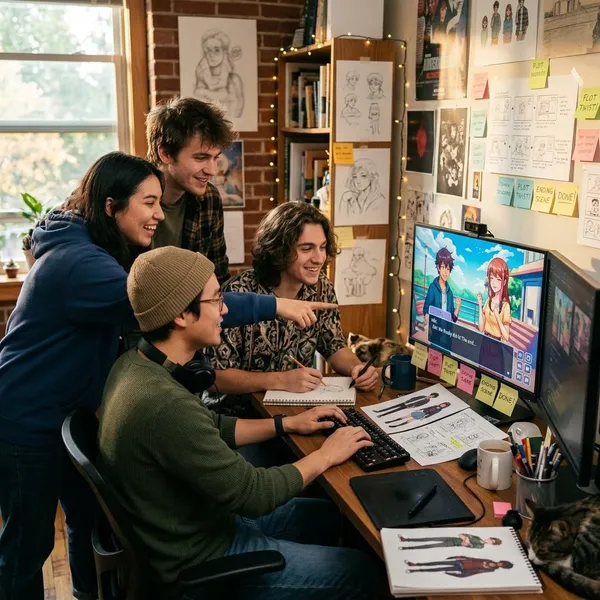
Saekano is not a technical tutorial about engines, coding, or release pipelines. Its value is in showing the creative and organizational side of a small visual novel-style project: who decides the direction, who writes, who draws, and who keeps the work from drifting.
Scenario writing
Scenario writing is shown as more than filling pages with dialogue. The team has to think about tone, emotional hooks, heroine appeal, and what kind of experience the player is supposed to remember after finishing a route.
- Story direction: what the game is emotionally about.
- Character voice: whether each heroine feels distinct.
- Pacing: when comedy, tension, and payoff should land.
- Fit with the project: whether the writer's style supports the game being made.
Character illustration
Character illustration carries the first impression. In a dating sim or visual novel-style project, a heroine's design can tell the player what kind of tone to expect before the writing has time to do its work.
Saekano also shows the less glamorous side: good art still has to match the concept and arrive when the rest of the team needs it. A beautiful design that pulls against the scenario, or appears too late to use properly, can still create problems.
Project planning
Planning is where the anime quietly becomes more than a romance comedy. The characters have to turn a vague dream into assigned roles, usable material, and a project that could actually be finished.
For someone interested in making a small creative project, this is the most transferable lesson: decide the shape of the game before everyone runs in different directions. The art, writing, and schedule all become easier to judge once the team agrees on what the finished game is supposed to be.
Deadline management
Deadlines matter because one late task can hold up the next one. A script delay affects art, art delays affect presentation, and poor communication makes every problem harder to fix.
- Set the target: know what must be finished first.
- Match roles to people: talent helps, but reliability matters too.
- Revise early: waiting too long makes changes more painful.
- Cut when needed: a smaller finished project beats an ambitious unfinished one.
Conclusion
If you want the most direct anime about a team making a visual novel-style romance game, Saekano is the safest recommendation. Watch it for the mix of creative roles, messy collaboration, romance, and deadline pressure; choose 16bit Sensation afterward if you want a wider look at bishoujo game culture rather than one focused team project.
FAQS
Is Saekano based on a visual novel?
No. Saekano is based on a light novel series. It still fits this search because its plot centers on characters creating a dating sim.
Is Saekano really about making a dating sim?
Yes. The dating sim project is central, although the anime gives just as much space to romance, comedy, and character conflict around the work.
Is 16bit Sensation about making visual novels?
Partly. 16bit Sensation is more about bishoujo and PC game development culture, so it is a close alternative rather than the cleanest answer.