Who Produced Each Beyoncé Album?
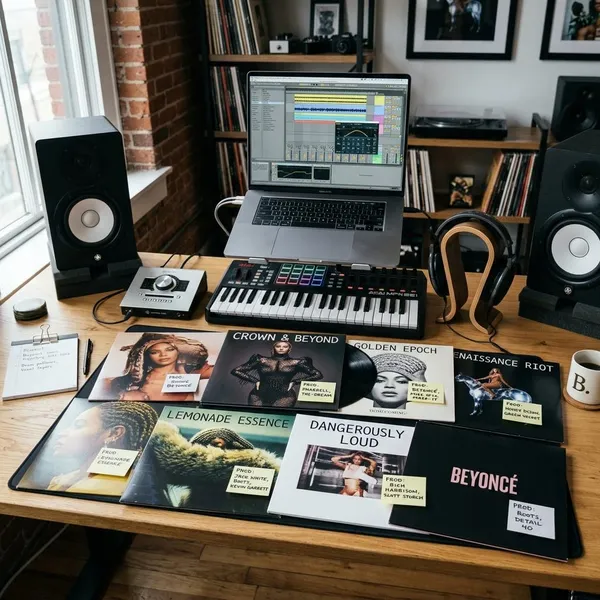
Beyoncé album producers are best understood album by album, because she rarely builds a project around just one studio name. For a quick fan-level answer, look at the main creative team for each era; for a credit, essay, playlist note, or sample question, check the track-level credits because producer, co-producer, songwriter, sample, and executive producer can mean different things.
Beyoncé producers by album
Beyoncé's albums usually combine a core production direction with track-specific collaborators. That is why a simple "who produced it?" answer can be misleading: one producer may define a song, while Beyoncé's executive role helps hold the album together.
| Album era | Production direction | Names often associated with the era |
|---|---|---|
| Dangerously in Love | R&B, hip-hop soul, crossover pop | Rich Harrison, Scott Storch, Missy Elliott, Focus..., Craig Brockman |
| B'Day | Funk, brass, club energy, harder drums | Rich Harrison, Swizz Beatz, Rodney Jerkins, Sean Garrett, The Neptunes |
| Beyoncé | Experimental R&B, atmosphere, visual-album mood | BOOTS, Timbaland, J-Roc, Detail, Hit-Boy, Mike Dean, Pharrell |
| Lemonade | Genre fusion tied to storytelling | Diplo, Mike Will Made-It, James Blake, Jack White, Just Blaze, Kevin Garrett |
| Renaissance | House, disco, ballroom, club music | The-Dream, Tricky Stewart, Honey Dijon, Nova Wav, A. G. Cook, Skrillex, Hit-Boy |
| Cowboy Carter | Country, Americana, folk, soul, rock, pop | The-Dream, Dave Hamelin, Raphael Saadiq and other track-level collaborators |
Beyoncé's role as executive producer
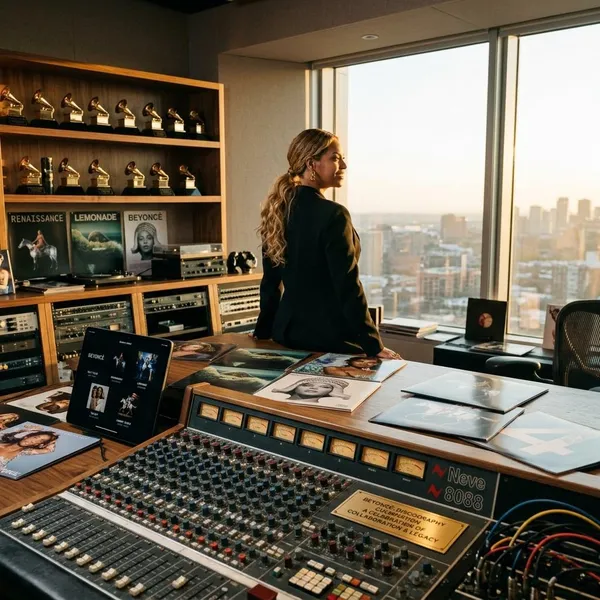
Beyoncé's executive producer role is the reason her albums can involve many producers without feeling like random compilations. She is not always the sole technical producer on every song, but she is central to the concept, collaborator choices, revisions, sequencing, and final presentation.
Sets the creative direction
Beyoncé's albums usually begin with a strong creative frame. Lemonade needed emotional and historical movement; Renaissance needed release, pleasure, and club continuity; Cowboy Carter needed a conversation with American roots music rather than a simple country costume.
That direction gives producers a target. Without it, a multi-producer album can sound like a playlist of unrelated sessions. With it, different sounds can still feel connected.
Chooses key collaborators
Her collaborator choices are rarely just about who is popular at the moment. BOOTS made sense for the shadowy self-titled era; Honey Dijon made sense for a project engaging house and club traditions; Dave Hamelin made sense for the more organic, roots-textured world of Cowboy Carter.
Shapes songs across the album
A Beyoncé song can change if it does not fit the larger project, even if it works on its own. That may mean altering an arrangement, changing vocal placement, revising structure, adding texture, or placing the track differently in the sequence.
- For a single: the main question is whether the song lands immediately.
- For an album track: the question is also whether it serves the emotional arc.
- For a concept-heavy project: the surrounding songs can change how the track is understood.
Oversees the final project
The final stage is where executive production becomes very visible: track order, transitions, features, mixes, credits, visuals, and the overall pacing of the release. On albums like Renaissance, the sequencing is part of the experience; on Lemonade, the emotional order is part of the story.
Key Beyoncé producer collaborations by era
The most useful Beyoncé producer collaborations are not always the longest-running ones. Some mattered because they defined one crucial shift; others stayed valuable because they could adapt as her sound changed.
Rich Harrison in the early solo years
Rich Harrison was crucial to the early solo years because his production gave Beyoncé immediate character. "Crazy in Love" is the obvious reference point, but the bigger contribution was a sound built on funk energy, horns, hard rhythmic movement, and performance-ready confidence.
That was exactly the right match for a singer proving she could stand outside a group. Harrison's production did not just support the vocal; it gave the records a physical charge.
The-Dream and Tricky Stewart in the pop era
The-Dream and Tricky Stewart helped sharpen Beyoncé's crossover pop language in the late 2000s and early 2010s. Their work leaned into hooks, clean rhythmic design, and glossy production that could travel well on radio without flattening her personality.
The useful distinction here is balance. Some pop production makes a singer sound interchangeable; their best Beyoncé work left room for vocal control, attitude, and phrasing.
BOOTS in the self-titled era
BOOTS stands out because the self-titled album did not use experimentation as decoration. His moodier, more minimal, more atmospheric approach helped move Beyoncé away from predictable pop structure and toward something stranger and more intimate.
For listeners tracing her production growth, this collaboration is a turning point. It showed that a Beyoncé album could be commercially huge while still sounding risky in texture and form.
Genre-spanning producers on Lemonade
Lemonade needed producers who could serve different emotional states without making the album feel scattered. Mike Will Made-It, James Blake, Jack White, and others each brought a distinct color: modern heaviness, sparse melancholy, rock abrasion, or gospel-rooted lift.
House and club producers on Renaissance
Renaissance depends on producers who understand dance music as culture, not just tempo. Honey Dijon's presence is central to that reading, while Nova Wav, A. G. Cook, The-Dream, Tricky Stewart, and others help shape the album's sleek, continuous, high-energy movement.
The production works because it respects both pop clarity and club logic. The tracks are not only catchy; they are arranged to keep energy traveling from one moment to the next.
The-Dream and Dave Hamelin on Cowboy Carter
The-Dream and Dave Hamelin represent two useful sides of Cowboy Carter: continuity and reinvention. The-Dream connects the album to a long Beyoncé creative thread, while Hamelin helps support the project's more organic, roots-facing texture.
That pairing matters because the album could have felt like a sudden genre detour. Instead, the production gives it enough familiar Beyoncé architecture to sit inside her catalog while still opening a new sonic door.
How Beyoncé's production changed over time
Beyoncé's production history is not a straight move from simple to complex. It is a widening circle: early R&B and funk, bigger pop structures, experimental R&B, genre storytelling, club music, and then Americana-rooted fusion.
R&B and funk in the early albums
The early albums leaned on R&B and funk because those sounds highlighted Beyoncé's strengths: vocal power, rhythmic precision, and stage energy. Big drums, horns, bass movement, and soul references made the records feel active rather than polite.
This was also a practical career move. A debut solo era needs recognizable hits, but it also needs identity. The best early production did both.
Pop expansion in the late 2000s
As Beyoncé moved deeper into global pop, the production became cleaner, brighter, and more hook-focused. The-Dream, Tricky Stewart, Stargate, Ryan Tedder, and other collaborators across that period helped create songs with broader radio reach.
The R&B foundation did not disappear. It became one part of a wider toolkit, which is why this era can feel both highly commercial and still recognizably Beyoncé.
Experimental R&B on Beyoncé
The self-titled album changed the stakes by making atmosphere central. Space, silence, vocal layering, and unusual song structures became part of the appeal, not obstacles to accessibility.
That shift matters because it changed how listeners approached her albums. Instead of waiting only for the biggest single, people had to pay attention to tone, sequencing, visuals, and emotional detail.
Genre fusion on Lemonade
Lemonade uses genre fusion with a clear purpose. Rock sharpens anger, blues and soul add historical weight, trap brings contemporary force, and gospel opens the music toward endurance and healing.
House and dance on Renaissance
Renaissance shifts the focus to movement. House, disco, ballroom, and funk influences are arranged so the album feels like one long release rather than a loose set of upbeat tracks.
That difference is important for anyone comparing it to standard pop-dance records. The best way to hear the production is from front to back, because the transitions and pacing are part of the design.
Americana and country influences on Cowboy Carter
Cowboy Carter brings in Americana and country influences while still pulling from soul, rock, pop, and Beyoncé's own vocal language. Acoustic textures, layered harmonies, and roots references are present, but the album does not reduce itself to one traditional category.
The production challenge was balance: honor familiar American music forms without turning the project into imitation. That tension is what makes the album more interesting than a simple genre switch.
Conclusion
The clearest answer is that Beyoncé does not have one fixed producer story; she builds a different production team for each era and then shapes the result through strong executive control. For a quick overview, follow the album-level names that define the sound, but for any serious credit question, go track by track and separate producer credits from songwriting, samples, co-production, and executive production.
FAQS
Does Beyoncé have one main music producer?
No. She has recurring collaborators, especially The-Dream, but her albums are usually built with different teams chosen for each project's sound and concept.
Did Beyoncé produce her own albums?
Yes, mainly in the executive producer sense. She guides the concept, collaborators, revisions, sequencing, and final album identity, while song-level production credits vary by track.
Who produced Renaissance?
Renaissance was produced by a large team with Beyoncé at the center, including The-Dream, Tricky Stewart, Honey Dijon, Nova Wav, A. G. Cook, Skrillex, Hit-Boy, and others on specific tracks.