Which Albums Should Everyone Hear at Least Once?
If you want the safest answer, start with best albums of all time picks that still work as full listens, not just records with one famous song. What's Going On, Abbey Road, Thriller, Kind of Blue, and The Miseducation of Lauryn Hill are good first stops because they explain different kinds of greatness: feeling, craft, popularity, mood, and cultural impact.

What Is the Best Album of All Time?
There is no single answer that satisfies every listener, but What's Going On, The Miseducation of Lauryn Hill, and Abbey Road are three of the strongest modern answers because major rankings keep placing them near the top. If you want one practical starting point, choose Abbey Road for the easiest first listen, What's Going On for the deepest emotional statement, or The Miseducation of Lauryn Hill for a modern-feeling blend of hip-hop, soul, and personal writing.
| Album | Artist | Why It Matters |
|---|---|---|
| What's Going On | Marvin Gaye | A defining soul album that turns social concern, spirituality, and personal feeling into one seamless statement. |
| Abbey Road | The Beatles | Peak studio-era Beatles: melodic, polished, inventive, and anchored by one of rock's most satisfying closing sequences. |
| Kind of Blue | Miles Davis | The essential gateway into jazz: elegant, spacious, deeply influential, and endlessly replayable. |
| Blue | Joni Mitchell | A landmark in confessional songwriting, balancing emotional openness with remarkable lyrical precision. |
| Pet Sounds | The Beach Boys | Expanded what pop could express through sophisticated arrangements, vulnerability, and studio imagination. |
| Thriller | Michael Jackson | The ultimate blockbuster pop album: global in reach, flawless in craft, and packed with era-defining singles. |
| Songs in the Key of Life | Stevie Wonder | A generous, wide-ranging masterpiece of soul, funk, pop, jazz, and social observation. |
| The Dark Side of the Moon | Pink Floyd | A complete album experience where theme, atmosphere, sequencing, and studio sound work as one world. |
| Nevermind | Nirvana | The album that pushed alternative rock into the mainstream while preserving raw emotional force. |
| To Pimp a Butterfly | Kendrick Lamar | A modern rap landmark weaving jazz, funk, spoken word, politics, identity, and moral conflict. |
How We Chose the Greatest Albums
The strongest albums were chosen by asking a practical question first: does this record still reward a full listen today? Sales, awards, and rankings matter, but they are not enough on their own. A famous album with two great singles and a weak middle should not outrank a record that holds its shape from beginning to end.
Lasting cultural influence
Cultural influence matters when an album changes what later artists think is possible. Pet Sounds reshaped pop arrangement, Nevermind pulled alternative rock into the mainstream, and Illmatic became a reference point for compact, image-rich rap writing.
Strong songwriting from start to finish
An all-time album should not collapse between the famous tracks. Blue, Rumours, and OK Computer remain powerful because deep cuts can become personal favorites after a few listens.
- Good sign: the middle stretch feels intentional, not like filler.
- Good sign: the final track leaves the album feeling complete.
- Warning sign: you keep wanting to skip back to the singles.
Innovative production and sound
Production matters most when it serves the songs. The Dark Side of the Moon uses transitions and atmosphere to create immersion; Loveless turns guitar texture into its own language; Discovery makes electronic production feel bright, emotional, and playful.
Unusual sound alone is not enough. A record can be experimental and still feel thin. The best production choices make the album more memorable, not just more impressive.
Critical support and listener loyalty
Critical praise helps identify important records, but listener loyalty is the better stress test. Thriller is not just historically huge; people still play it because the hooks, pacing, and performances remain easy to enjoy.
The same applies to Kind of Blue. It has serious jazz prestige, yet it also works for a casual evening listen. That mix of respect and real-world replay is a strong signal that an album has moved beyond hype.
Representation across genres and eras
A fair all-time list cannot treat rock as the only serious album tradition. Jazz, soul, hip-hop, pop, metal, electronic music, punk, and singer-songwriter records all create greatness in different ways.
This matters for actual listeners, too. If you mostly love lyrics, a Joni Mitchell or Nas record may open the door faster than a studio-rock classic. If you care about rhythm and sound design, Daft Punk or Stevie Wonder may make the idea of a "great album" click sooner.
Which Classic Album Should You Hear First?
Start with the album closest to music you already enjoy. That is not cheating; it is the fastest way to understand why classic albums matter before you move into genres that may take more adjustment.
Start with Abbey Road for classic rock
Abbey Road is the best first move if you want classic rock that does not require much decoding. It has famous songs, sharp melodies, and enough variety to keep a first listen moving.
For a casual listener, the front half gives instant rewards. For someone trying to understand album craft, the medley near the end is the real lesson: short pieces can add up to a finale that feels larger than its parts.
Start with What's Going On for soul
Pick What's Going On if you want an album that feels smooth on the surface but carries real weight underneath. It is especially good for a quiet, focused listen because the mood builds gradually instead of jumping from one obvious single to the next.
Start with Thriller for pop
Thriller is the easiest pick for someone who normally listens to singles and wants to try a full classic album. Several tracks will probably already sound familiar, which makes the full listen less intimidating.
- Best situation: you want energy, hooks, and clean production.
- Listen closely for: how the album shifts styles without losing momentum.
- Do not dismiss it because: huge sales do not automatically mean shallow music.
Start with Kind of Blue for jazz
Kind of Blue is the right first jazz album if you are worried jazz will feel too technical. It is calm, melodic, and open, so you can enjoy the mood before you understand the theory.
Try it in a low-distraction setting rather than as background noise in a busy room. The pleasure is in tone, space, and small responses between players, not in waiting for a big chorus.
Start with Blue for singer-songwriter music
Blue is the choice for listeners who care most about lyrics, voice, and emotional detail. It does not need spectacle because the writing is already exposed enough.
If you usually like polished pop, the sparseness may feel plain at first. Give it a few songs before judging; the album works by accumulation, where small turns of phrase start to feel sharper as the mood deepens.
Start with Discovery for electronic music
Discovery is a friendly entry point because it treats electronic music as colorful and emotional, not cold. The repetition is part of the design, but the hooks keep it approachable for listeners coming from pop or rock.
It is also a good pick for a social setting, where a denser classic might lose people. You can enjoy it casually first and then notice the sequencing and production details later.
Start with Master of Puppets for metal
Master of Puppets works for metal beginners because the heaviness is disciplined. The riffs are aggressive, but the songs have clear shapes, tension, and release.
If your only concern is volume, start with the title track and "Welcome Home (Sanitarium)" before playing the full album. If you already like fast guitar music, go straight through and pay attention to how controlled the pacing is.
Conclusion
The best starting album is usually not the one someone tells you is most important; it is the one close enough to your taste that you will actually play it all the way through. Begin with Abbey Road, What's Going On, Thriller, Kind of Blue, Blue, Discovery, or Master of Puppets, then use that first connection to explore the records that feel less familiar.
FAQS
What is the best-selling album of all time?
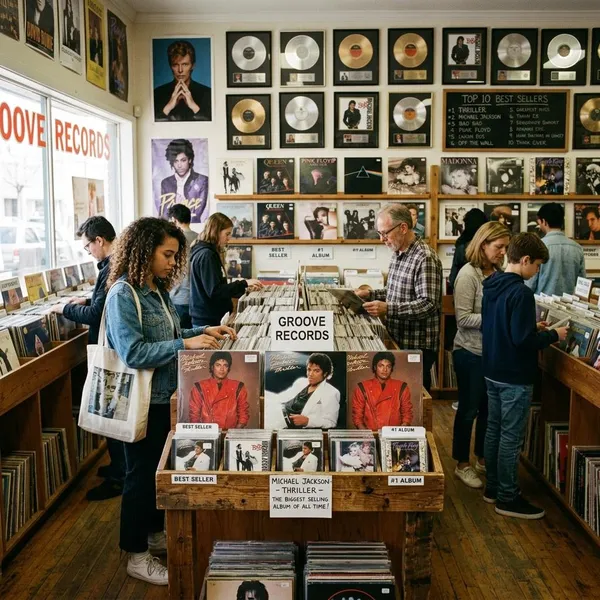
Thriller by Michael Jackson is widely recognized as the best-selling album of all time. Exact totals vary by source and certification method, but it remains the standard answer.
Why do greatest album lists rank different records first?
Lists rank different albums first because they value different things: influence, songwriting, cultural meaning, innovation, sales, or listener attachment. The top choice often says as much about the ranking method as it does about the album.
Can a recent release become one of the best albums of all time?
Yes, but it needs time. A recent album can enter the conversation quickly, while true all-time status becomes clearer after years of replay, influence, and serious listener loyalty.