Who Won Grammy Album of the Year?
If you just want the 2026 Grammy album of the year result, the winner is DeBÍ TiRAR MáS FOToS by Bad Bunny. The category rewards a complete album rather than one breakout track, so the winner is judged on the full project: songs, performances, production, engineering, and the credited creative team behind it.
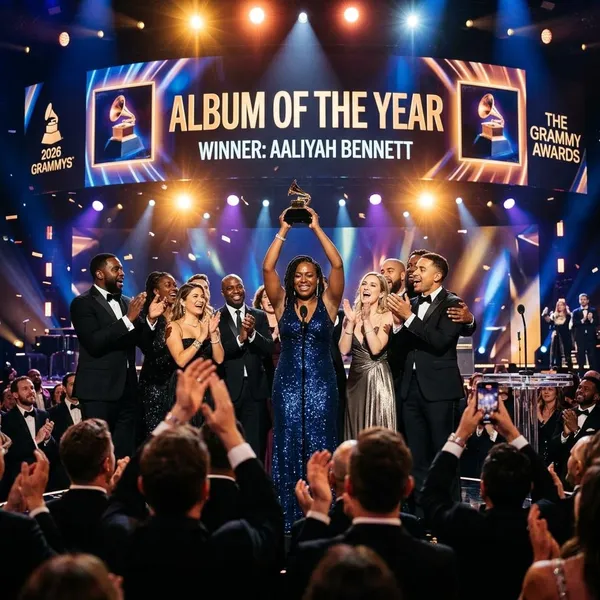
2026 Grammy Album of the Year Winner and Nominees
The 2026 field mixed global pop, rap, R&B, and high-concept pop records. For a casual viewer, the fastest way to read this category is simple: it is not asking which album had the biggest single, but which release worked best as a complete listen.
Winner: DeBÍ TiRAR MáS FOToS by Bad Bunny
DeBÍ TiRAR MáS FOToS by Bad Bunny won the 2026 Grammy Album of the Year. The win matters because it recognizes the album as a full body of work, not just a major cultural moment or a collection of popular tracks.
It also became a historic result: Bad Bunny earned the first Spanish-language win in this category. If you are comparing Grammy milestones, that is the part that makes the 2026 result stand out beyond the usual winner list.
SWAG by Justin Bieber
SWAG by Justin Bieber was nominated in a category where name recognition is not supposed to be enough on its own. A nomination here suggests voters saw the project as a cohesive album rather than only a high-profile release.
Man's Best Friend by Sabrina Carpenter
Man's Best Friend by Sabrina Carpenter made the final eight as a full-project contender. For listeners who mainly know an artist through singles, this category is often the reminder to judge pacing, songwriting consistency, and whether the album has a clear identity from start to finish.
Let God Sort Em Out by Clipse
Let God Sort Em Out by Clipse gave the lineup a strong hip-hop entry. Rap albums tend to stand out in this category when the writing, production, features, and sequencing all serve one larger point instead of feeling like separate showcases.
That is the useful distinction for fans debating the nomination: technical skill matters, but the album also has to hold together against pop, R&B, country, Latin, and other releases on the same ballot.
MAYHEM by Lady Gaga
MAYHEM by Lady Gaga was nominated as the kind of ambitious pop project that Grammy voters often take seriously when the concept is backed by strong songs. A big visual identity can help an album stay visible, but Album of the Year still comes down to the record itself.
GNX by Kendrick Lamar
GNX by Kendrick Lamar joined the field as another album-centered rap release. Kendrick's strongest Grammy cases have usually come from records that feel deliberate in voice, structure, and production choices, and that kind of full-album discipline fits this category well.
MUTT by Leon Thomas
MUTT by Leon Thomas was the sort of nomination that may have pushed some casual Grammy watchers to listen more closely. Album of the Year can do that: it sometimes highlights records with deep industry respect even when they are not the loudest mainstream prediction.
CHROMAKOPIA by Tyler, the Creator
CHROMAKOPIA by Tyler, the Creator rounded out the nominee list with a project built around a strong creative world. Tyler's best album work often combines sound design, character, structure, and mood, which are exactly the qualities that can make a record feel like more than a playlist.
What the Grammy Album of the Year Recognizes
Album of the Year recognizes the total achievement of an album. The easiest mistake is to treat it like a popularity prize, but the award is broader than that: voters are weighing the main artist's work alongside songwriting, production, engineering, mixing, mastering, and other credited contributions.
Overall achievement across a full album
The category asks whether the album works from beginning to end. A strong contender usually has flow, variety, and a reason to be heard as one project instead of a handful of standout songs surrounded by filler.
Performances and songwriting throughout the project
Performances and songwriting matter across the whole release. That includes vocal delivery, rapping, musicianship, hooks, lyrics, and whether each song has a purpose inside the album.
Production, engineering, mixing, and mastering
Production, engineering, mixing, and mastering shape how the album actually lands in your ears. A record can sound intimate, glossy, raw, dense, clean, or tense because of choices made behind the scenes.
These details are not just technical decoration. Clear vocals, balanced instruments, consistent mastering, and production that supports the songs can make an album easier to return to, especially over repeated listens.
Work by the artist and credited creative team
Album of the Year is not only for the main artist. Depending on the Grammy rules for that year, credited contributors such as producers, engineers, mixers, and songwriters may also be recognized for qualifying work on the album.
That is why the award carries so much industry weight. It honors the finished album as a collaboration, even when the public mostly associates the project with one performer's name.

How the Grammy Album of the Year Is Chosen
The Album of the Year process has two big filters: eligibility first, voting second. That distinction helps explain a lot of Grammy confusion, because an album cannot win just because fans stream it heavily or because it dominates the conversation online.
Eligible albums are submitted for consideration
The process starts when an album is submitted for Grammy consideration, usually by an approved party such as a label, distributor, or representative connected to the release. The album still has to fit the relevant eligibility period and category requirements.
Submission is not the same as nomination. Think of it as entering the race, not making the final ballot.
The Recording Academy checks eligibility
The Recording Academy reviews submitted albums before voting members decide on nominees. This step can involve release timing, category placement, format, and other rule-based checks.
Voting members choose the eight nominees
Voting members narrow the eligible field to eight nominees. Reaching this shortlist is already a major signal of peer support, especially because Album of the Year compares projects across genres instead of within one lane.
A final vote decides the winner
After nominations are announced, voting members choose from the final eight. The album with the strongest final-round support wins, which is why a commercially dominant release can still lose to a project voters see as more complete or more artistically convincing.
This is the scenario that causes the most debate at home: if you are judging by charts, you may expect one result; if voters are judging full-album craft, the outcome can look very different.
An independent firm counts the votes
An independent accounting firm counts the Grammy votes. That does not make every result less debatable, but it does mean the final tally is handled outside the Academy's public-facing awards conversation.
Recent Grammy Album of the Year Winners
Recent winners show that there is no single Grammy formula. Some albums win as massive pop events, some as genre-expanding statements, and some because they feel especially unified as a listening experience.
| Year | Winning album | Artist | Why the result is notable |
|---|---|---|---|
| 2026 | DeBÍ TiRAR MáS FOToS | Bad Bunny | First Spanish-language winner |
| 2025 | COWBOY CARTER | Beyoncé | Historic win and major genre conversation |
| 2024 | Midnights | Taylor Swift | Swift's record-setting fourth win |
| 2023 | Harry's House | Harry Styles | Polished pop album with broad support |
Album of the Year Records and Milestones
Album of the Year records help put each new result in context. A win can be about the album itself, but it can also change how the category is remembered: who has dominated it, which languages have been recognized, and which artists broke through after long-running Grammy conversations.
Taylor Swift leads all artists with four wins
Taylor Swift leads all artists with four Album of the Year wins. That record is especially difficult because the category changes shape every year, with different genres, voting moods, and cultural moments competing at once.
For anyone tracking Grammy history, this is the current benchmark for repeat success in the category.
Frank Sinatra, Stevie Wonder, and Paul Simon each have three wins
Frank Sinatra, Stevie Wonder, and Paul Simon each have three Album of the Year wins. Their shared total shows how rare repeat victories are, but it also shows that the category has rewarded very different kinds of album craft across different eras.
Bad Bunny earned the first Spanish-language win
Bad Bunny's 2026 win with DeBÍ TiRAR MáS FOToS marked the first Spanish-language victory in Album of the Year. The practical takeaway is bigger than trivia: it shows that a non-English album can compete for the Grammys' top album prize when voters see it as the strongest complete project.
Beyoncé became the fourth Black woman to win
Beyoncé became the fourth Black woman to win Album of the Year when COWBOY CARTER won in 2025. That milestone sits inside a much longer Grammy history, which is why the result was discussed as both an artistic win and a representation moment.
Conclusion
The 2026 Album of the Year result is easy to name but more useful to understand: Bad Bunny won with DeBÍ TiRAR MáS FOToS, and the win is judged through the lens of a complete album rather than one hit song. If you are comparing nominees or arguing about a Grammy outcome, start with full-project strength first, then look at popularity, milestones, and cultural impact after that.
FAQS
Can an EP win Album of the Year?
Usually, no. Album of the Year is meant for releases that meet the Recording Academy's album eligibility rules for that Grammy year, and EPs often fall outside that format.
Do album sales or streams decide the winner?
No. Sales and streams can make an album more visible, but Recording Academy voting members decide the winner through the Grammy voting process.
Can a soundtrack win Album of the Year?
Yes, if it meets the category's eligibility rules. It still has to compete as a strong album, not merely as a successful companion to a film, series, or stage project.