What Is Harry Styles' Kiss All the Time Disco Occasionally?
The Harry Styles Kiss All the Time. Disco, Occasionally. album makes the most sense as a reset record: still warm and melodic, but more interested in groove, space, and mood than in chasing another massive Harry's House moment. If you want to know whether it is worth a full listen, start with the contrast at its center: danceable songs for release, softer tracks for reflection, and lyrics that feel more grown-up than flashy.
What is Kiss All the Time. Disco, Occasionally.?
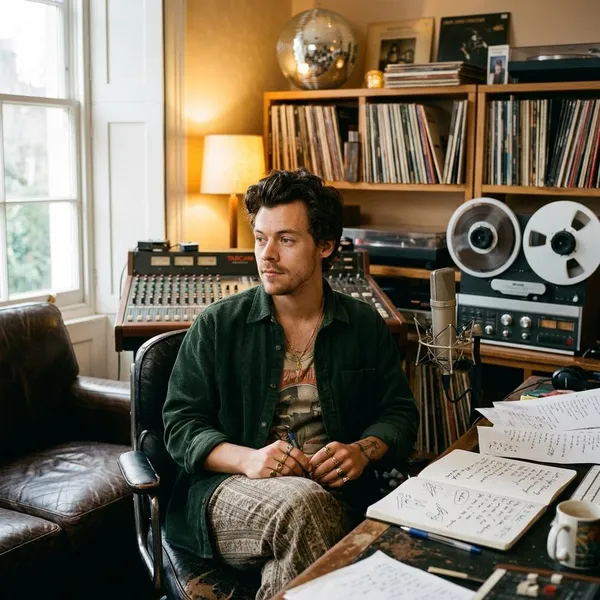
Kiss All the Time. Disco, Occasionally. is presented as Harry Styles' fourth solo album, following the huge run of Harry's House and the long stretch of touring that came after it. The main shift is not that he has suddenly become a full disco artist. It is that rhythm, looseness, and emotional breathing room move closer to the front.
Harry Styles' fourth solo album
As a fourth solo album, it matters because it shows a choice: repeat the safest parts of the last era, or let the next one feel different. This record keeps the soft vocal tone and melodic ease people expect from Styles, but it frames them with more movement and a slightly looser emotional posture.
If you mainly liked Harry's House for its polished pop hooks, this album may feel more subtle at first. If you liked the moments where his songs sounded relaxed, intimate, or a little off-center, the shift is easier to understand.
Twelve tracks produced with Kid Harpoon
The approved album setup centers on twelve tracks produced with Kid Harpoon, which gives the project continuity without making it sound like a copy of earlier work. That partnership is useful because the production can leave room for Styles' voice instead of crowding every track with obvious "single" moments.
- For first-time listeners: notice the bass and percussion before judging the choruses.
- For longtime fans: listen for how the vocal layers carry emotion without turning every song into a ballad.
- For playlist listeners: the upbeat tracks may land first, but the slower songs explain the mood of the album.
A new chapter after Harry's House
The album works best when it is not treated as Harry's House 2. That record had the feel of a bright, carefully built pop home; this one feels more like stepping outside after the party and deciding what still matters when the noise drops.
That does not make it less accessible. It just means the hooks are often tied to atmosphere and pacing rather than constant lift-off. Anyone expecting only stadium-sized choruses may need a second listen, while listeners open to a warmer, groove-led record will probably settle into it faster.
What inspired the album?
The album's inspiration is easiest to follow as a change in speed: stop after touring, slow down in Italy, then reconnect with movement in Berlin. That sequence gives the record its shape. It is not only about dancing; it is about needing space before dancing feels free again.
Taking a break after touring
After a long tour, a break can change the kind of songs an artist wants to make. Instead of writing from adrenaline, the album seems to come from recovery: less pressure to perform every feeling, more interest in what remains once the schedule stops.
That matters for the listener because a post-tour album can go two ways. It can sound exhausted and automatic, or it can use the pause to find a clearer point of view. This one aims for the second path, with songs that feel measured rather than rushed.
Slowing down in Italy
Italy's role is the calmer side of the record: routine, food, streets, stillness, and the kind of ordinary life that disappears during a major tour. You can hear that idea most clearly in the softer pacing and in the way some songs avoid forcing a dramatic climax.
For a listener playing the album alone at night or on a slow morning walk, this side may be more rewarding than the dance references. It gives the record warmth instead of making it feel like a style exercise.
Finding freedom in Berlin nightlife
Berlin gives the album its pulse. The nightlife influence is less about copying a club sound exactly and more about the feeling of being anonymous in a room where movement takes over. That is an important distinction: the record uses dance energy, but it still sounds like a Harry Styles pop album.
- Italy adds patience: the songs have room to sit with feeling.
- Berlin adds release: the grooves feel physical, not just decorative.
- The tour break adds perspective: the album sounds like a response to pressure, not a continuation of it.
What does the album sound like?
The sound sits between dance-pop, soft funk, and reflective pop songwriting. It is not a heavy club record, and it is not a stripped acoustic album either. The best way to approach it is to listen for balance: basslines and beats create motion, while vocals and ballads keep the emotional center close.
If you are deciding whether it fits your taste, ask what you want from a Harry Styles album. For background energy, the grooves will probably stand out first. For close listening, the layered vocals and quieter tracks do more of the lasting work.
Funky basslines and dance beats
The basslines and beats are the album's quickest entry point. They make the songs feel alive without pushing them into hard club territory, so the record can work in a car, on a walk, or at a small get-together rather than only in a party setting.
Synth textures and layered vocals
Synths mostly add color: a little glow, a little tension, sometimes a soft late-night shimmer. They do not take over the songs, which helps the album avoid sounding like it is wearing a costume.
The layered vocals are more central. They make the record feel intimate even when the beat is moving, and they give repeat listens something to catch besides the obvious chorus or bassline.
Softer ballads between upbeat tracks
The ballads are not just pauses between the "fun" songs. They stop the album from becoming one flat mood and give the upbeat tracks more lift when they return.
- If you want a dance-only record: the slower songs may feel like interruptions at first.
- If you like full-album pacing: those same songs make the sequence easier to revisit.
- If lyrics matter most to you: the quieter tracks are where the emotional details tend to land harder.
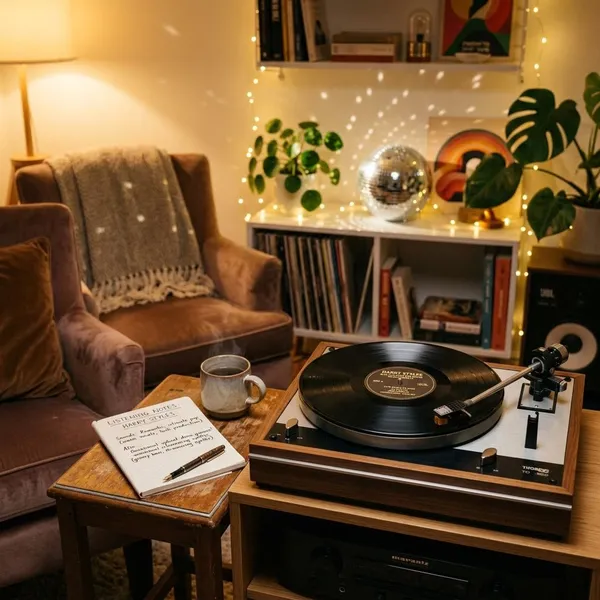
What do the standout songs mean?
The standout songs help explain why the album is not only a dance-influenced pivot. "Aperture," "Coming Up Roses," and "Carla's Song" each point to a different kind of looking back: admitting growth, accepting temporary love, and remembering how music can change someone's inner life.
Aperture explores personal growth
"Aperture" works as a personal-growth song because the image suggests opening up: letting in light, admitting a mistake, or seeing a situation from a wider angle. As an opener, that is a smart emotional signal. The album begins with a willingness to reconsider, not with a victory lap.
Coming Up Roses reflects on fleeting love
"Coming Up Roses" treats short-lived love as something that can still be real. The useful distinction is that the song does not seem interested in turning a temporary relationship into either a tragedy or a fantasy.
That makes it one of the more grown-up emotional moments on the album. If you have ever had a connection that mattered but was clearly not built to last, the song's point is easy to understand: length is not the only measure of meaning.
Carla's Song celebrates discovering music
"Carla's Song" is about the private shock of hearing a song at the right moment. Its emotional weight comes from a simple idea: music does not have to belong to the biggest public moment of your life to become important.
That theme fits the album neatly because it pulls attention away from chart performance and back toward listening. For fans, it may be the track that explains why a song can feel personal even when millions of other people are hearing it too.
Conclusion
Kiss All the Time. Disco, Occasionally. is strongest when you let it be a mood-driven reset rather than a direct sequel to Harry's House. Start with the standout tracks if you are unsure, then play the full sequence if the mix of groove, softness, and reflection clicks; the album is most rewarding for listeners who want movement with a little emotional aftertaste.
FAQS
What does the album title mean?
It suggests a contrast between affection and release. "Kiss All the Time" feels intimate and warm, while "Disco, Occasionally." points to movement without promising a nonstop disco record.
How does it compare with Harry's House?
It feels looser and more rhythm-led than Harry's House. The earlier album is easier to read as polished pop; this one leans more into post-tour reflection, dance texture, and mood.
Where can you stream or buy the album?
Check Harry Styles' official artist pages first, then major streaming or digital music stores in your region. Availability, editions, and physical formats can vary, so the official listing is the safest place to confirm what is actually released.