What Order Should You Watch the Fast and Furious Movies In?
If you are watching the fast and furious movies in order for the first time, use release order. It keeps the character introductions, twists, and franchise escalation in the order they were meant to land. Chronological order is better for a rewatch, mainly because Tokyo Drift moves later in the timeline, and Hobbs & Shaw works as an optional stop between The Fate of the Furious and F9.
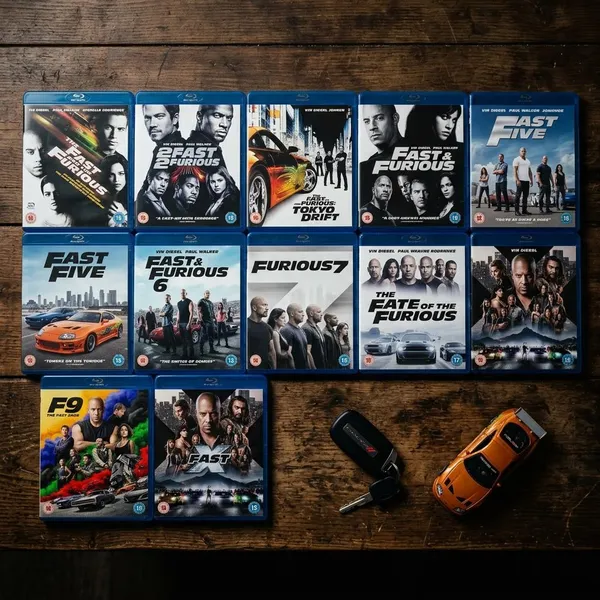
Fast and Furious movies in release order
Release order is the cleanest starting point because it follows the way the franchise actually grew: street racing first, heist movies next, then the huge globe-trotting action era. The only part that may feel odd is Tokyo Drift, which was released third but takes place later in the story.
The Fast and the Furious
The first movie introduces Brian O'Conner, Dominic Toretto, Letty, Mia, and the "family" idea that the whole franchise keeps returning to. It is smaller than the later films, with more focus on undercover work, loyalty, street racing, and whether Brian can separate his job from the people he starts to care about.
Do not skip it just because the later movies are bigger. Without this one, Dom and Brian's relationship loses most of its weight.
2 Fast 2 Furious
This sequel moves Brian to Miami and brings in Roman Pearce and Tej Parker, both of whom become much more important later. Dom is not part of this movie, so it can feel like a side road, but it gives Brian a life outside Los Angeles and adds the lighter buddy-movie energy the series keeps using.
The Fast and the Furious: Tokyo Drift
Tokyo Drift follows Sean Boswell in Japan and looks almost separate from the main saga at first. For a first watch, leave it here in release order and accept the mystery around Han; the later movies explain why this placement feels strange.
For a rewatch, this is the one film you may want to move. It fits more smoothly after Fast & Furious 6 and before Furious 7.
Fast & Furious
The fourth movie brings Dom, Brian, Letty, and Mia back into the same central story. It also starts turning the series from loosely connected adventures into a more serialized saga, so skipping it creates gaps in several later emotional beats.
Fast Five
Fast Five is the big turning point. The Rio heist, the expanded crew, and Luke Hobbs' arrival shift the franchise away from racing-first stories and toward team-based action movies.
If someone only knows the franchise for impossible stunts and huge set pieces, this is where that version really begins.
Fast & Furious 6
This movie pushes the team-action format further and brings Letty's story back into focus. It is also essential for understanding where Tokyo Drift belongs, because the ending connects the main saga to the Tokyo timeline.
Furious 7
Furious 7 follows the fallout from the Tokyo storyline and introduces Deckard Shaw as a major threat. It also carries extra emotional weight because of Paul Walker's final appearance in the franchise.
This is one of the entries where watch order really matters. It works best after you understand Han, Shaw, Brian, and Dom's crew dynamic.
The Fate of the Furious
The eighth main movie sends Dom against his own team under pressure from Cipher. By this point, the franchise has fully moved into larger-than-life action, so expect submarines, cyber threats, shifting alliances, and less of the grounded street-racing tone from the early films.
Fast & Furious Presents: Hobbs & Shaw
This spin-off focuses on Luke Hobbs and Deckard Shaw rather than Dom's crew. It is part of the wider franchise, but it is not required for the main family storyline.
Include it if you want the complete live-action watch-through or enjoy Hobbs and Shaw's rivalry. Skip it if you are planning a shorter weekend marathon and only care about the numbered saga.
F9
F9 brings in Dom's brother Jakob and leans heavily on family history, callbacks, and long-running character threads. If you watched Hobbs & Shaw, place it before this movie; if you skipped the spin-off, you can go straight from The Fate of the Furious to F9.
Fast X
Fast X continues the main saga and ties its villain, Dante, back to events from Fast Five. At this stage, the series is not very friendly to random viewing; you can enjoy the action, but the grudges, returns, and emotional stakes make far more sense if you have followed the earlier films.
Why is Tokyo Drift out of order?
Tokyo Drift is confusing because it was the third movie released, but later films revealed that its main events happen after several sequels. The practical reason is simple: Han became important enough that the franchise wanted to keep using him, so later-released movies were set before his Tokyo story.
Han appears in later-released prequels
After Tokyo Drift, Han shows up in Fast & Furious, Fast Five, and Fast & Furious 6. Those movies were released later, but story-wise they happen before his time in Tokyo.
That is the main timeline trick. If you are watching chronologically, Han's order should feel like: meet him with Dom's crew, follow his team missions, then reach Tokyo.
Fast & Furious 6 catches up to Tokyo Drift
By the end of Fast & Furious 6, the franchise catches up to the events connected to Tokyo Drift. That is why many chronological lists place Tokyo Drift immediately after Fast & Furious 6.
- First watch: keep Tokyo Drift third and let the timeline twist unfold naturally.
- Rewatch: move it after Fast & Furious 6 for smoother continuity.
- Casual background watch: release order is easier because you do not have to rearrange anything.
Furious 7 continues from the Tokyo storyline
Furious 7 picks up the consequences of the Tokyo thread and folds them back into Dom's main crew. That is why the most story-friendly sequence is Fast & Furious 6, then Tokyo Drift, then Furious 7.
Where does Hobbs & Shaw fit?
Hobbs & Shaw fits after The Fate of the Furious and before F9. It is canon to the wider franchise, but it behaves more like a side adventure than a required chapter in Dom's story.
Include it for a complete franchise marathon, skip it for a tighter mainline watch. You will not lose the core plot of F9 by skipping it.
It takes place after The Fate of the Furious
The spin-off works after the eighth movie because Hobbs and Shaw already have enough shared history by then. Their hostile buddy-comedy dynamic makes much less sense if you watch it before seeing how they clash in the main films.
It comes before F9 in the watch order
If you include the spin-off, place it before F9. That keeps the full live-action order neat without interrupting Dom's storyline later.
| What you want | Best choice |
|---|---|
| Every live-action movie | Watch Hobbs & Shaw after The Fate of the Furious |
| Only Dom's main saga | Skip the spin-off and go straight to F9 |
| A shorter weekend binge | Leave it out unless Hobbs or Shaw is a favorite |
Which Fast and Furious watch order should you choose?
Choose based on what kind of viewing experience you want, not because one order is universally "correct." Release order is best for first-timers, chronological order is better once you know the twists, and mainline-only order is the practical choice if you do not want the spin-off.
Release order for your first watch
Release order is the safest first-watch choice because it preserves introductions and reveals. You meet Brian, Roman, Han, Hobbs, and Shaw in the order the franchise originally presented them, which makes the character shifts easier to follow.
This is also the better option if you are watching with someone new to the series. Rearranging Tokyo Drift too early can solve one timeline issue but create a different problem: it changes how the franchise was designed to reveal Han's importance.
Chronological order for a rewatch
Chronological order is useful when you already know the major twists and want the story to flow with fewer timeline bumps.
- The Fast and the Furious
- 2 Fast 2 Furious
- Fast & Furious
- Fast Five
- Fast & Furious 6
- The Fast and the Furious: Tokyo Drift
- Furious 7
- The Fate of the Furious
- Fast & Furious Presents: Hobbs & Shaw
- F9
- Fast X
Mainline order if you want to skip the spin-off
For a focused main-saga watch, remove Hobbs & Shaw and keep the rest in chronological order. That gives you the cleanest version of Dom's family storyline without a side mission breaking up the pace.
- The Fast and the Furious
- 2 Fast 2 Furious
- Fast & Furious
- Fast Five
- Fast & Furious 6
- The Fast and the Furious: Tokyo Drift
- Furious 7
- The Fate of the Furious
- F9
- Fast X
Conclusion
For most people, the best choice is simple: watch in release order the first time, then use chronological order if you ever revisit the series. Move Tokyo Drift after Fast & Furious 6 when you want the timeline to feel smoother, and treat Hobbs & Shaw as an optional spin-off unless you want every live-action chapter.
FAQS
How many Fast and Furious movies are there?
There are 11 live-action feature films if you count Hobbs & Shaw. Without the spin-off, there are 10 mainline films through Fast X.
Do you need to watch Hobbs & Shaw before F9?
No. F9 still makes sense without it, so only watch Hobbs & Shaw first if you want the complete franchise order.
Are the Fast and Furious short films necessary?
No, the short films are optional. They add small bits of context, but the feature films give casual viewers enough to follow the story.