How Does a Screenplay Differ From a Movie?
The easiest way to understand screenplay vs movie is to treat the screenplay as the working plan and the movie as the finished experience. The screenplay tells people what could be filmed; the movie shows what survived writing, planning, filming, performance, sound, and editing. If you are comparing the two, look first at what changed on screen: dialogue, scene order, character emphasis, pacing, and anything that production could not realistically keep.
How does a screenplay become a movie?
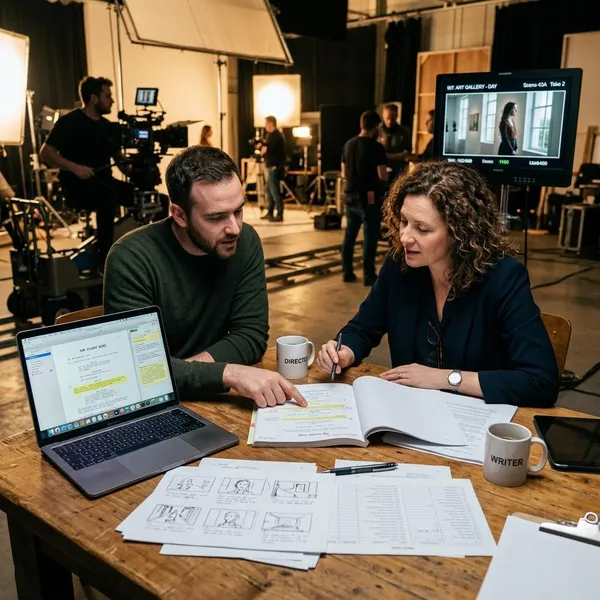
A screenplay becomes a movie through a chain of decisions, not a simple copy-and-paste process. The written draft has to be developed, turned into a production plan, filmed in real conditions, and reshaped in the edit. The biggest mistake is thinking the script is the final version of the story; it is usually the version everyone starts from.
Develop and revise the screenplay
The first stage is not just "write the script." Writers often go through outlines, drafts, notes, rewrites, and sometimes major structural changes before a screenplay is ready for production. A scene may be cut because it repeats information, costs too much, or slows the story before cameras are even involved.
If you are writing your own screenplay, this is the stage where you should be most ruthless. Check whether each scene changes the situation, reveals character, or pushes the story forward. If it only explains what the audience can already understand, it may not survive later anyway.
Plan the production
Pre-production turns the screenplay into a practical map for making the film. The crew breaks down each scene for cast, locations, props, wardrobe, special effects, vehicles, weather concerns, and scheduling. A two-line scene on the page can become a complicated shoot if it needs a crowd, a night exterior, a child actor, or a location that is only available for one day.
- Small indie project: scenes may be rewritten around available rooms, daylight, and a limited cast.
- Larger production: the script may stay closer to the draft, but scheduling, permits, and set builds still shape what is possible.
- Student film: the smartest script is often the one that can be filmed reliably, not the one with the biggest idea.
Film the scenes
Filming adds performance, camera choices, movement, sound, and all the unpredictable details of a real set. The screenplay may say that two characters argue in a kitchen, but the finished scene depends on the actors' timing, where the camera sits, how close the shots are, and whether the director wants the moment to feel angry, funny, tense, or sad.
Edit the final movie
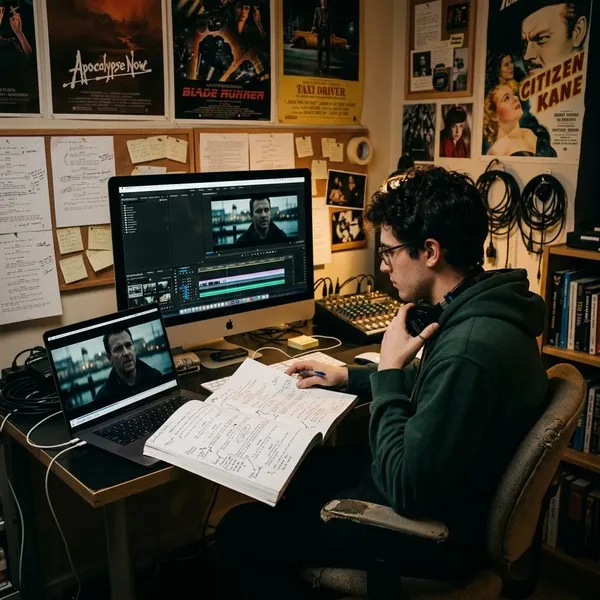
Editing decides what the audience actually experiences. A scene that reads well may feel slow once it is placed beside other scenes. A silent reaction may explain more than three lines of dialogue. Editors can shorten, reorder, or remove material so the story lands with better rhythm.
Sound, music, color, and visual effects also change the emotional meaning of footage. A quiet hallway can feel ordinary, romantic, or threatening depending on the cut and sound design. That is why the final movie may feel different from the screenplay even when the plot is mostly the same.
Why is the movie different from the screenplay?
The movie differs from the screenplay because film is collaborative and physical. A screenplay describes what can be seen and heard, but the finished movie is built from interpretation, performance, available resources, and editing choices. The changes usually come from five places: directing, acting, production limits, pacing, and scene-level revisions.
Directors interpret scenes differently
Directors decide how the written scene should feel. The same page can become tense, warm, awkward, comic, or cold depending on framing, blocking, lighting, camera movement, and pace. A screenplay gives the event; direction gives the audience a point of view on that event.
Actors shape characters through performance
Actors turn written behavior into human behavior. A character on the page is built from dialogue and action lines; on screen, the character gains voice, posture, hesitation, eye contact, and timing.
This matters most when comparing a script to a scene you already know. You may find that the dialogue looks plain on the page, but the actor made it memorable through a pause, a look, or a slight change in delivery. That does not mean the screenplay failed. It means performance added a layer the page could only suggest.
Production limits require changes
A screenplay can imagine anything, but a movie has to be made with a real budget, real locations, real schedules, and real people. Expensive stunts, large crowds, difficult weather, animals, vehicles, or several far-apart locations can force changes before or during filming.
- Acceptable change: a rooftop conversation moves to a stairwell but keeps the same conflict.
- Risky change: an action scene is cut and the character no longer proves courage or skill.
- Common low-budget fix: combine locations or characters so the story remains filmable.
Editing changes pacing and structure
Editing often reveals that the audience needs less explanation than the screenplay provides. Once a viewer can see an expression, hear a silence, or understand a relationship visually, extra dialogue may feel heavy.
Editors also control when information arrives. A reveal might move later for suspense, an opening may be tightened to reach the main conflict faster, or a subplot may disappear because it pulls attention away from the central story. The script suggests rhythm; the edit creates it.
Scenes may be added, shortened, or removed
Scenes change when the film needs clearer motivation, smoother transitions, a stronger ending, or a faster middle section. Sometimes extra footage is shot later to fix confusion. Sometimes a fully filmed scene is removed because it repeats a point the audience already understands.
If you are studying a screenplay after watching the film, pay attention to deleted scenes. They often show what the filmmakers valued less once the full movie was assembled: backstory, explanation, side characters, or scenes that read well but slowed the viewing experience.
Screenplay vs script vs shooting script
These terms overlap, but they are not always interchangeable. "Script" is the broad umbrella word, "screenplay" usually means a script written for a screen medium, and "shooting script" means the production-ready version used by the crew. If you only remember one distinction, remember that a screenplay is mainly for presenting the film story, while a shooting script is mainly for making the film.
| Term | Best use | What to check |
|---|---|---|
| Script | General word for written performance material | What medium it is for |
| Screenplay | Film or screen story draft | Scenes, dialogue, action, visual storytelling |
| Shooting script | Production planning and filming | Scene numbers, revisions, department use |
Conclusion
A screenplay gives the movie its first shape, but the finished film is the result of many later choices. If you want to compare them usefully, do not just count what changed; ask whether each change improves clarity, emotion, pacing, or practical production. The page starts the story, but the screen proves what actually works for an audience.
FAQS
Is a screenplay the same as a movie script?
Usually, yes. In everyday use, "screenplay" and "movie script" both mean the written document for a film, though "script" is the broader word.
Can a screenplay exist without becoming a movie?
Yes. Many screenplays remain unproduced and may still be used as writing samples, development material, or proof that a writer can handle story and format.
Do directors always write the screenplay?
No. Some directors write or co-write their films, but many direct screenplays written by someone else, especially in studio and hired-writer situations.