What Makes DeBÍ TiRAR MáS FOToS So Compelling?
If you searched for a bad bunny album worth starting with right now, DeBÍ TiRAR MáS FOToS is the one to know: it is catchy enough for a casual first listen, but its real pull is how tightly it connects Bad Bunny's music to Puerto Rico, memory, and cultural loss. Start with the standout tracks if you want the quickest entry point, then listen again for the details that make the record feel more personal than a standard hit collection.
What is Bad Bunny's latest album?
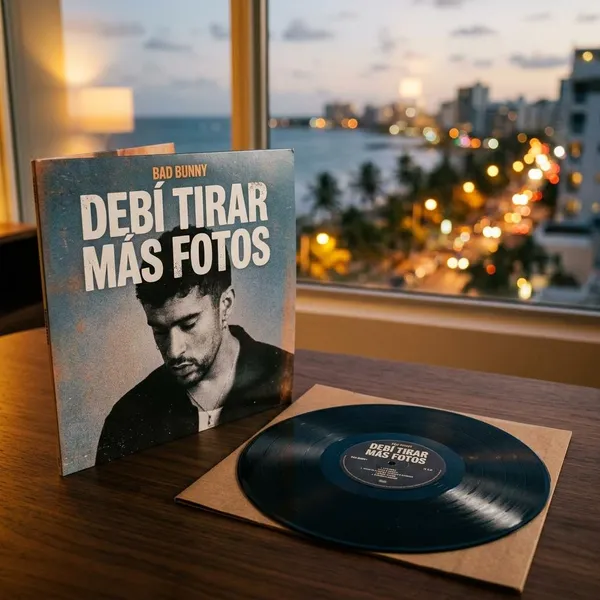
Bad Bunny's latest album is DeBÍ TiRAR MáS FOToS, often shortened to DtMF. Released in early 2025, it stands out because it does not treat Puerto Rico as background decoration. The island shapes the language, the rhythms, the mood, and the emotional stakes of the record.
Which songs should you hear first?
The easiest way into DeBÍ TiRAR MáS FOToS is not to play only the biggest-sounding track and stop there. The album makes more sense if you hear a few songs that show its different sides: city energy, dance tradition, regret, warning, and everyday Puerto Rican warmth.
If you are listening casually on a commute or at the gym, begin with the most immediate songs and let the themes catch up later. If you are trying to understand why the album matters culturally, start with the tracks that put memory and Puerto Rico closest to the surface.
NUEVAYoL
"NUEVAYoL" is a strong first play because it gives the album movement right away. The title points to New York through a Puerto Rican pronunciation and perspective, which matters because the city has long been tied to Puerto Rican migration, music, and identity.
What makes the track useful as an entry point is its double function. You can enjoy it as a restless city song, but it also hints at life between places: the island, the diaspora, the memory of home, and the pressure to keep culture visible when people move elsewhere.
BAILE INoLVIDABLE
"BAILE INoLVIDABLE" is where the album's sense of memory becomes easier to feel without needing a long explanation. It sounds inviting and danceable, but the title also carries the ache of a moment you wish you could keep.
This is a good track for listeners who know Bad Bunny mainly through global pop or reggaeton. It shows that the traditional influence on the album is not a costume; it is part of the emotional storytelling.
DtMF
"DtMF" is the song to play when you want the album's central idea in its clearest form. The regret in "I should have taken more photos" is simple, but it lands because almost everyone knows the feeling of realizing too late that a normal day was worth remembering.
On a second listen, the song feels bigger than private nostalgia. It can also be heard as a way of talking about places, family routines, and cultural details that people assume will always be there until they start to disappear.
LO QUE LE PASÓ A HAWAii
"LO QUE LE PASÓ A HAWAii" is one of the album's most direct warnings. The comparison raises fears about displacement, outside ownership, tourism, and the possibility that Puerto Rico could be loved as an image while local people lose control of the place itself.
If you only want background music, this may not be the track that grabs you first. If you want to understand the album's seriousness, it is essential because it turns the record's cultural concern into something hard to ignore.
CAFé CON RON
"CAFé CON RON" brings the album back to daily life. The title suggests taste, conversation, routine, and a kind of local intimacy that makes the bigger themes feel human rather than abstract.
That smaller scale is the point. Culture is not preserved only through flags, slogans, or public arguments; it also lives in repeated habits, familiar sounds, and the things people share without making a speech about them.
What is the album about?
DeBÍ TiRAR MáS FOToS is about what happens when memory becomes urgent. Bad Bunny uses love, dancing, migration, local sound, and political unease to ask what people lose when home changes faster than they can process.
The album is not difficult to enjoy, but it rewards a more careful listen. A casual fan may hear strong hooks and genre switches first. A listener with Puerto Rican context may hear sharper references to diaspora, gentrification, cultural pride, and the fear of being pushed out of your own story.
Puerto Rican identity and belonging
Puerto Rican identity is not just a topic on the album; it is built into how the record moves. The pronunciation, musical choices, local references, and guest voices all keep pointing back to Puerto Rico as a living place rather than a vague symbol of pride.
Belonging is treated as something people have to maintain. For someone living on the island, that may mean recognizing the pressure on neighborhoods and traditions. For someone in the diaspora, it may mean staying connected through language, music, family memory, and community even when daily life happens somewhere else.
Love, loss, and nostalgia
The nostalgia on this album is not soft decoration. It has an edge because the songs often suggest that what is being remembered may also be under threat.
That is why the title works so well. "I should have taken more photos" sounds personal at first, like regret over a relationship or a family moment. Then it opens into a larger feeling: maybe we should have paid closer attention to the places, people, and customs that made life feel recognizable.
Displacement and cultural survival
Displacement gives the album its tension. The record keeps returning to the fear that Puerto Rican culture could be celebrated globally while actual Puerto Rican communities face pressure from rising costs, outside investment, migration, and cultural flattening.
- The risk: local life becomes a marketable aesthetic instead of a protected reality.
- The human cost: families, elders, neighborhoods, and everyday routines become harder to keep intact.
- The album's response: sound, memory, and community become ways to resist being erased.
This is where the album feels most urgent. It does not ask listeners only to admire Puerto Rican culture; it asks them to notice what threatens it.
What shapes the album's sound?
The album's sound is shaped by the balance between modern Latin urban music and older Puerto Rican and Caribbean traditions. Reggaeton and dembow give it force and familiarity, while salsa, plena, and local collaborations make it feel rooted rather than generic.
That balance is the main reason the album works for different listeners. Someone looking for a new Bad Bunny record can still find rhythm and charisma. Someone listening for cultural meaning can hear how the production choices support the album's ideas about memory, place, and continuity.
Reggaeton and dembow
Reggaeton and dembow keep the album connected to the sound world many Bad Bunny fans expect. They give several tracks their pulse, but they are not used only for easy club energy.
Salsa and plena
Salsa and plena add history, warmth, and a more communal feeling. Their presence makes the album feel less like a playlist chasing trends and more like a conversation with Puerto Rican musical memory.
For younger listeners who mostly know Bad Bunny through streaming hits, these sounds can act like a doorway into older traditions. For listeners who grew up around those rhythms, they may feel less like references and more like recognition.
Collaborations with Puerto Rican artists
The Puerto Rican collaborations matter because they keep the album from feeling like one superstar speaking alone for an entire culture. Other voices bring different textures, accents, and energies into the record.
That choice also fits the album's message. Cultural survival is not a solo performance; it depends on shared participation, local scenes, and people making space for one another.
Conclusion
DeBÍ TiRAR MáS FOToS is best heard as both a rewarding Bad Bunny record and a pointed love letter to Puerto Rico. Start with the standout songs if you want the quick version, but give the full album room if you want to understand why its mix of dance, regret, pride, and warning has stayed in the conversation. The strongest impression comes when the catchy moments and the cultural weight stop feeling separate.
FAQS
What does DtMF stand for?
DtMF stands for DeBÍ TiRAR MáS FOToS, which roughly means "I should have taken more photos." The phrase captures the album's regretful mood without reducing it to one simple meaning.
How does it compare with Un Verano Sin Ti?
Un Verano Sin Ti feels looser, sunnier, and more beach-season in spirit, while DeBÍ TiRAR MáS FOToS is more rooted and politically aware. Both are accessible, but the newer album asks for closer attention to Puerto Rican identity and displacement.
Is there a short film connected to the album?
Yes. Bad Bunny released a short film connected to the project, and it extends the album's concerns about Puerto Rican life, memory, language, and cultural change in visual form.