How Do You Choose the Right Anime Figure Display Case?
The right anime figure display case is the one that fits your actual figures first, then your room and budget. Start with interior height, shelf depth, dust protection, and shelf strength before worrying about lighting or style. A small desk collection can work well in acrylic, while heavier scale figures or resin pieces usually deserve a stronger cabinet with better access.
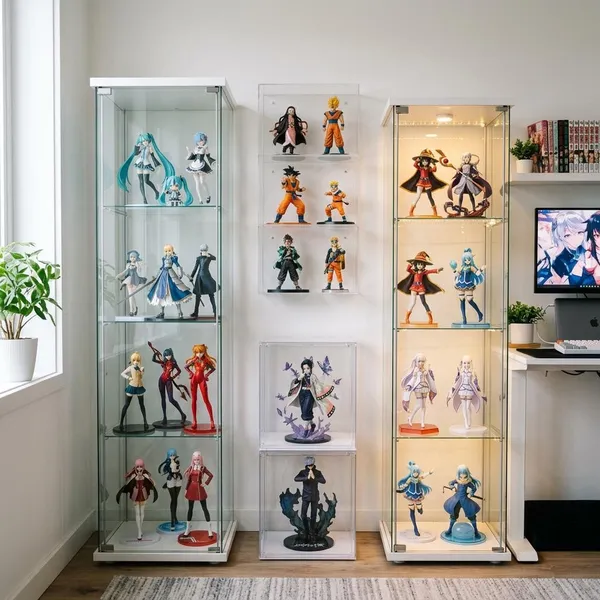
What type of anime figure display case should you choose?
Choose the case type by asking one practical question: are you protecting a few figures, building a long-term display, or trying to save space? A case that looks good online can still be annoying if the shelves are too shallow, the doors are narrow, or the cabinet takes over the room.
| Collection situation | Best case direction | Watch out for |
|---|---|---|
| A few prize figures, nendoroids, or desk pieces | Acrylic case | Scratches and limited shelf strength |
| Premium scale figures or a display corner | Glass cabinet | Weight, assembly, and tipping risk |
| A collection that keeps expanding | Modular case | Whether matching units will still be available later |
| Small bedroom or apartment | Wall-mounted case | Wall strength and safe installation |
| Large wings, weapons, or resin statues | Custom case | Higher cost and measurement mistakes |
How do you measure for an anime figure display case?
Measure the usable interior space, not just the outside dimensions on the product page. Shelf thickness, door frames, lighting strips, and back panels can reduce the space your figures actually get. The safest order is height first, then width, then base depth, then room clearance.
Measure the tallest figure
Measure from the bottom of the base to the highest point, including hair spikes, hats, raised arms, weapons, wings, or effect parts. Scale labels are not enough: two 1/7 figures can need very different shelf heights because the pose changes everything.
Measure the widest pose
Width is where many collectors get caught out. A sword, cape, tail, or outstretched arm may extend far beyond the base, so measure the full pose as it will actually sit in the case.
If two wide figures need to stand side by side, leave enough room to remove one without knocking the other. A crowded shelf may fit on paper but still feel risky every time you clean it.
Measure each figure base
The base decides how much shelf surface the figure uses. Measure both width and depth, especially for scenic bases, irregular shapes, transparent supports, or figures designed to stand at an angle.
Add space above and around each figure
A tight fit is not a good fit. Leave clearance above the tallest point and around delicate parts so you can place, rotate, and clean the figure without scraping paint or bending accessories.
- For display: spacing helps each figure read clearly from the front.
- For cleaning: your hand needs room to reach the base safely.
- For lighting: leave space so LEDs are not pressed close to the figure.
Check the available floor or wall space
Measure the room like you would measure furniture. For floor cabinets, check depth, walking space, and door swing. For wall-mounted cases, check studs or suitable anchors, nearby switches, outlets, window trim, and furniture below the display.
Leave room for future figures
If you still pre-order figures, leave some spare capacity. That does not mean buying the largest cabinet possible; it means choosing adjustable shelves, a modular line, or a layout with room for a few new arrivals.
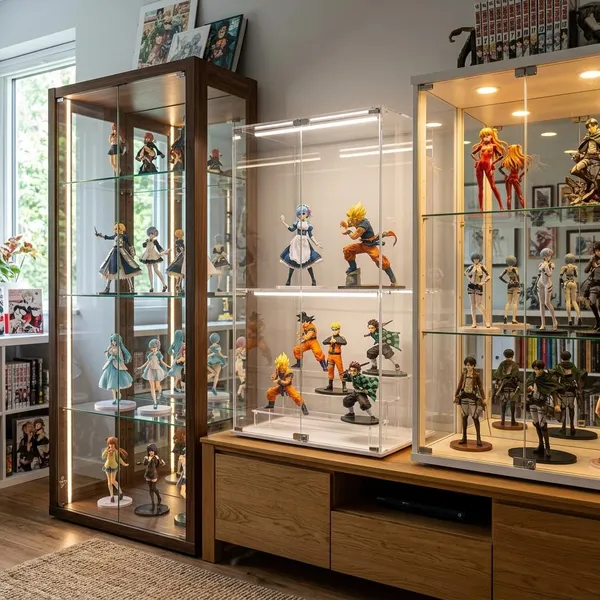
Which display case features matter most?
The most useful features are the ones that reduce handling and prevent avoidable damage. Dust control, shelf strength, stability, and easy access matter more than decorative extras. Lighting is nice, but it should come after the case already fits the figures safely.
Sealed doors reduce dust
Well-fitted doors are one of the biggest upgrades over open shelving. They will not make a normal home display airtight, but they can noticeably reduce dust on hair details, clothing textures, and scenic bases.
This matters because every cleaning session is also a handling risk. If you own fragile figures with small accessories, better dust control is not just about appearance; it means you touch the figures less often.
Strong shelves support heavier figures
Check shelf support before placing several large figures on one level. Heavy scale figures, resin statues, and dense bases can make weak shelves bow over time.
- Look for: stated weight limits, reinforced supports, tempered glass, metal brackets, or sturdy engineered wood.
- Avoid: loading the top shelf with the heaviest pieces.
- Be cautious with: multiple resin statues on one glass shelf unless the rating clearly supports it.
Adjustable shelves fit different scales
Adjustable shelves are worth prioritizing if your collection mixes nendoroids, prize figures, 1/8 scales, 1/7 scales, and taller figures. Fixed shelves often waste space on short figures while squeezing taller ones into awkward positions.
Stable frames reduce tipping risks
A stable frame is essential for tall cabinets, homes with pets, or rooms where people regularly walk past the display. Look for solid joints, level feet, and anti-tip hardware when available.
If the cabinet rocks during assembly or feels flexible when empty, do not assume it will feel safer when loaded. Place heavier figures lower and avoid setting the case on uneven flooring without correcting it.
Wide doors make figures easier to move
Wide access is easy to overlook until you try to remove a figure with a large base or fragile effect part. Hinged doors often give better front access, while sliding doors save space in tight rooms.
For a small apartment, sliding doors may be the practical choice. For large scales that need both hands to lift safely, a wider hinged opening can be less stressful.
Expandable designs support collection growth
An expandable design helps if your collection grows by series, scale, or theme. Matching add-on units keep the room looking intentional instead of turning the display into a mix of unrelated storage pieces.
Before buying, check whether the brand or product line looks stable enough to buy again later. Expansion is only useful if compatible parts are still available when you need them.
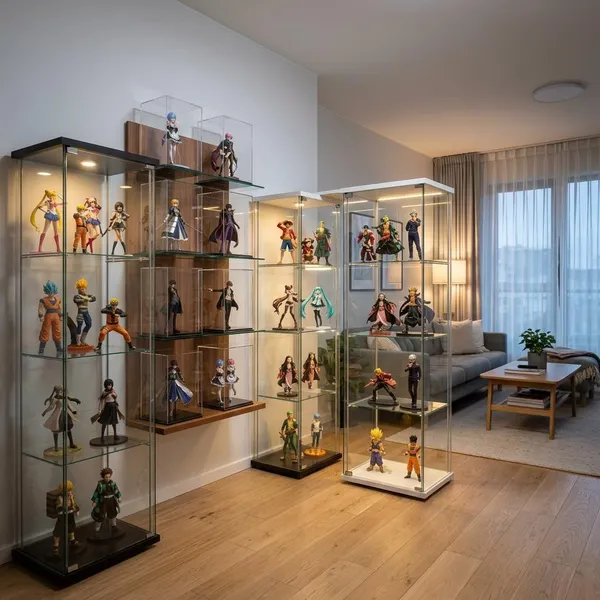
Conclusion
A good display case should make your figures safer and easier to enjoy, not just put them behind glass. Measure the tallest and widest pieces first, choose a case type that suits your room, and treat dust control, shelf strength, and access as must-have features. If the case gives you room to handle figures carefully and add a few future pieces, it is usually the better buy than the one that simply looks largest or cheapest.
FAQS
What size display case is best for anime figures?
Choose a case based on the tallest figure, the widest pose, and the deepest base you plan to display. Interior dimensions matter more than the outside cabinet size.
Are LED lights safe for anime figures?
Low-heat LEDs are generally a sensible choice for display lighting. Avoid placing strips directly against figures, painted parts, or tight enclosed areas where heat could build up.
Is it worth keeping anime figure boxes?
Keep boxes for expensive, fragile, or hard-to-replace figures if you have the space. If storage is limited, prioritize boxes with custom inserts, delicate parts, or figures you may move or sell later.