Which Visual Novel Anime Are Worth Watching?
If you want to try visual novel animes, start with shows that still feel complete after losing the game's choices and alternate routes. Steins;Gate is the safest all-around first pick, while Clannad, Higurashi, Fate/stay night, Amagami SS, and Summer Pockets each work better for different moods.
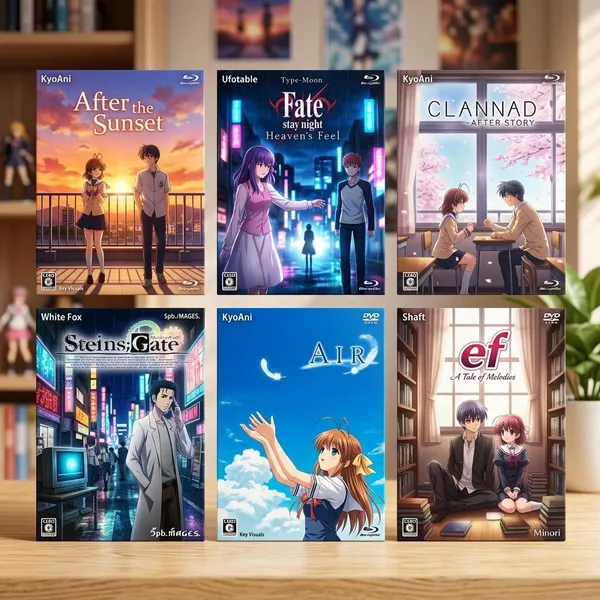
Best visual novel anime to start with
The easiest entry point is not always the most famous title. Pick by genre first, then check whether the anime tells a satisfying story without requiring you to play the source right away.
If you want a quick way to narrow it down:
- Want suspense and time travel? Start with Steins;Gate.
- Want emotional romance? Choose Clannad, ideally with After Story.
- Want horror and mystery? Try Higurashi.
- Want fantasy action? Go with a main Fate/stay night adaptation and do not worry about the whole franchise at first.
- Want to understand routes clearly? Amagami SS makes the structure obvious.
Steins;Gate for sci-fi and suspense
Steins;Gate is the best first choice for many viewers because it works as a strong anime on its own. The opening stretch is slower than a typical thriller, but it uses that time to make the cast, rules, and later consequences matter.
Clannad for romance and drama
Clannad is the better starting point if you care more about relationships, family, and emotional payoff than plot twists. It begins with school-life comedy and character-focused drama, then becomes much stronger when paired with Clannad: After Story.
Higurashi for horror and mystery
Higurashi no Naku Koro ni is for viewers who enjoy being unsettled and confused on purpose. Its repeated arcs are not filler; they are part of how the mystery changes shape as you learn more.
Fate/stay night for fantasy action
Fate/stay night is famous, exciting, and a little messy for beginners because the original visual novel has separate routes and the anime franchise expanded in many directions. The basic appeal is simple: mages summon legendary heroic spirits and fight in a high-stakes fantasy war.
Amagami SS for route-based romance
Amagami SS is useful because it does not hide the route structure. Each heroine gets her own romantic arc, and the timeline resets instead of forcing every love interest into one awkward blended plot.
Summer Pockets for modern Key drama
Summer Pockets fits viewers who want a newer-looking Key drama with a gentle summer mood, emotional character stories, and a quieter pace. It is a natural follow-up if you already like Clannad, Kanon, or Air.
How visual novel routes change in anime
Visual novels are built around choices, routes, and alternate outcomes. Anime has to turn that into one fixed sequence, so even a good adaptation usually changes the way the story feels.
One route becomes the main story
A common approach is to make one route the backbone of the anime. This usually works best when that route carries the main theme, main relationship, or true ending of the source.
Several routes are combined
Route blending tries to include more of the cast in one timeline. It can work when the source routes naturally overlap, but it becomes risky when every heroine or side story needs its own emotional payoff.
Side routes are shortened
Side routes are often reduced to brief subplots because there is not enough runtime for every character. The anime may keep one important scene while cutting the daily interactions that made the route feel personal.
That does not automatically ruin a show, but it changes expectations. A supporting character who feels flat in the anime may have a much richer arc in the game.
Alternate endings are often removed
Most anime versions choose one ending because multiple endings can weaken a continuous TV story. Bad endings, bittersweet outcomes, and route-specific conclusions are usually left to the original visual novel.
For anime-only watching, that can be a good thing: one ending is cleaner and easier to recommend. If you like comparing "what if" outcomes, the game will usually be the more satisfying version.
Why some visual novel anime feel incomplete
When a visual novel anime feels unfinished, the problem is often compression rather than a weak premise. A game may spend dozens of hours on routes, inner thoughts, side scenes, and endings that a one-season anime cannot fully include.
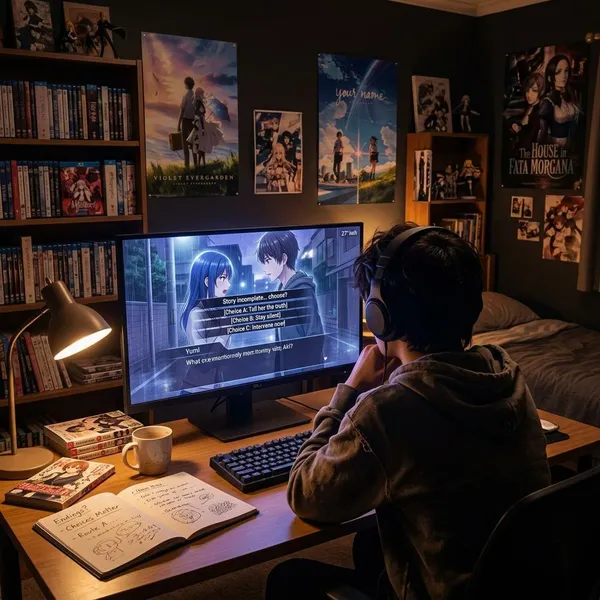
Too many routes are packed into one season
A 12- or 13-episode season cannot usually give several full routes the space they had in the game. The result can feel like a highlight reel: every character gets a moment, but few get enough buildup.
This is especially noticeable in romance adaptations, where emotional weight depends on ordinary scenes as much as big confessions. If the anime rushes from one heroine's problem to the next, it is probably trying to cover too much.
Inner thoughts lose screen time
Visual novels often rely on the protagonist's internal narration. Once that narration is reduced, a character who felt conflicted or thoughtful in the game can seem passive or underwritten in the anime.
Voice acting, music, and animation can replace some of that feeling, but not all of it. Mysteries and psychological stories are the most affected because hidden reasoning is often part of the tension.
Character arcs get shortened
Strong character arcs usually come from accumulation: repeated conversations, small choices, quiet habits, and gradual trust. Anime often cuts those small pieces first because they do not look essential to the main plot.
- Acceptable cut: a minor scene is removed, but the character's motivation still makes sense.
- Risky cut: the emotional climax remains, but the relationship behind it feels rushed.
- Bad cut: a route's conflict appears and resolves before the viewer has a reason to care.
Later game chapters remain unadapted
Some anime only adapt the opening chapters, one popular route, or enough material to introduce the world. That can leave mysteries unresolved or make the ending feel like a pause rather than a conclusion.
How to choose a visual novel anime
Choose with a simple priority order: genre first, franchise complexity second, completion third. Source accuracy matters more after you already know you like the story.
Start with your favorite genre
If you already like thrillers, start with Steins;Gate. If you want sad romance, start with Clannad. If you prefer horror, Higurashi is a better match than forcing yourself through a romance classic because it has a bigger reputation.
Genre fit matters because visual novel pacing can be slower than standard anime pacing. A slow build feels rewarding only when you actually care about the type of story being built.
Choose simpler franchises first
A simpler franchise is usually better for a first watch. Steins;Gate, Clannad, and Amagami SS are easier to approach than a large property with alternate versions, side stories, and route-specific adaptations.
If you enjoy complex franchise maps, Fate can be fun early. If you mainly want to sit down and watch without researching order, save it until you are more comfortable with route-based storytelling.
Look for a complete anime story
Before starting, check whether the anime reaches a real ending, needs a sequel, or stops before the source's main payoff. You do not need a perfect adaptation; you need enough closure for your viewing style.
For a casual viewer, a complete anime story is usually the better choice. For someone willing to play the original later, even a partial adaptation can be worthwhile as a mood test.
Play the original for deeper routes
Play the original visual novel when the anime leaves you wanting more character depth, alternate outcomes, or internal perspective. The game is usually where side routes, bad endings, and slower emotional buildup make the most sense.
Conclusion
The best choice depends less on the label "visual novel adaptation" and more on what kind of story you want right now. Start with a genre you already enjoy, avoid overly tangled franchises at first, and check whether the anime has enough closure; if a show still feels compressed but you love its world, that is usually the point where the original visual novel becomes worth trying.
FAQS
What anime are based on visual novels?
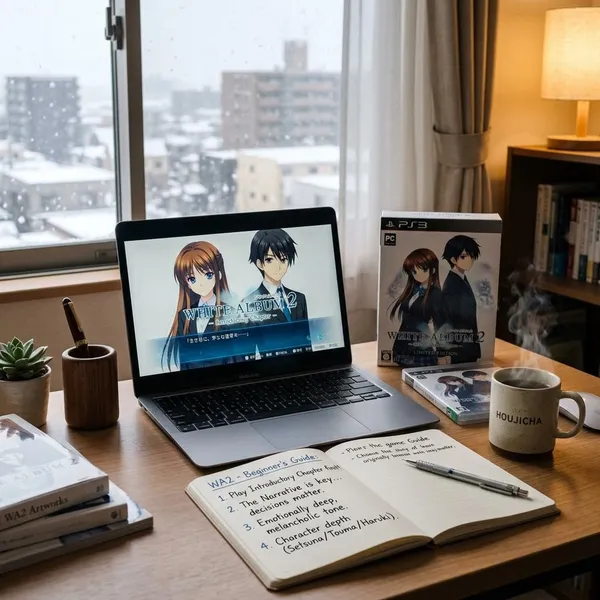
Well-known examples include Steins;Gate, Clannad, Higurashi no Naku Koro ni, Fate/stay night, Amagami SS, Kanon, Air, Little Busters!, and White Album 2. They are not limited to romance; the format also covers sci-fi, horror, fantasy, mystery, and drama.
Is Steins;Gate based on a visual novel?
Yes. Steins;Gate began as a visual novel by 5pb. and Nitroplus, and the anime adapts its branching sci-fi story into a more focused TV narrative.
Are visual novel anime the same as dating-sim anime?
No. Dating-sim-style romance is only one part of visual novel adaptations. Amagami SS fits that route-based romance feel, while Steins;Gate and Higurashi are driven by suspense, mystery, and psychological tension.
Why do visual novel anime cut character routes?
They cut routes because anime has limited runtime and must follow one watchable timeline. Studios usually choose one main route, merge several routes, or shorten side stories so the series does not become too fragmented.