What Makes the Album Dark Side So Memorable?
If you searched for album dark side, the record you want is Pink Floyd's The Dark Side of the Moon: a 1973 album best heard from front to back, not as a handful of famous songs. Start with the full sequence once, preferably with headphones or a quiet room, because the transitions, voices, heartbeats, clocks, and reprises are part of the point.
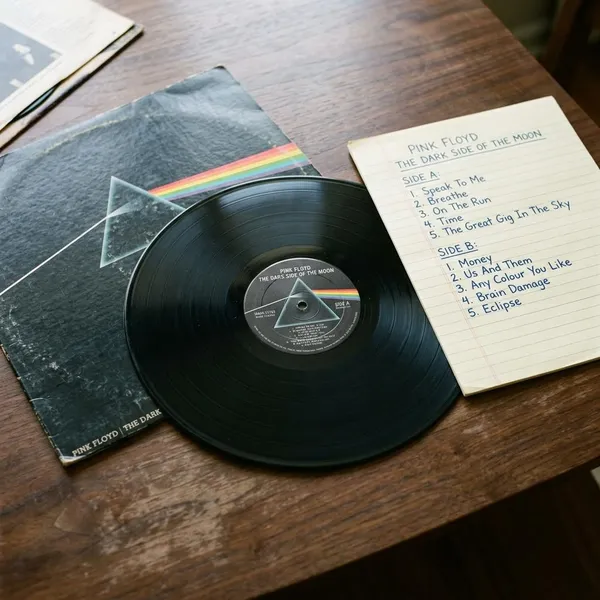
The Dark Side of the Moon track list
The Dark Side of the Moon has 10 tracks, but it does not behave like a normal collection of separate songs. The order matters: the album moves from breath and anxiety into time, money, conflict, mental strain, and finally a closing statement that ties everything together.
Speak to Me
Speak to Me works like an opening door rather than a full song. The heartbeat, laughter, spoken fragments, and sudden sound bursts introduce pieces of the album before the listener understands how they fit.
That matters because the record is built as a continuous experience. The track tells you how to listen: pay attention to atmosphere, not only melody.
Breathe (In the Air)
Breathe (In the Air) sounds calm on the surface, with soft vocals and slow, floating guitar lines. Underneath that ease is a warning about routine, pressure, and drifting into a life that feels chosen only because nobody questioned it.
On the Run
An anxious listener may connect with On the Run before they can explain why. The track turns movement, travel, and panic into sound through synthesizer patterns, effects, and a restless sense of acceleration.
It is also one of the clearest places to hear the album's studio ambition. Pink Floyd are not just decorating a song with effects; the effects are the song's nervous system.
Time
Time gives the album its sharpest wake-up call. The clocks at the start are not a gimmick; they force the theme into the room before the lyrics begin.
The song hits differently depending on when you hear it. A younger listener may hear it as a warning not to waste years on autopilot, while an older listener may hear recognition in the line between ordinary routine and sudden regret.
The Great Gig in the Sky
The Great Gig in the Sky approaches death without turning it into a lecture. The spoken lines set the subject, but the wordless vocal carries most of the emotion: fear, resistance, release, and something close to acceptance.
Money
Money is the album's most instantly recognizable track, thanks to the bass line and cash-register rhythm. Its target is simple enough — greed, status, and the behavior money encourages — but the song stays lively instead of becoming a sermon.
Its placement is important. After songs about time, stress, and mortality, Money shifts the pressure outward into society: work, wealth, competition, and the way value gets measured.
Us and Them
Us and Them slows everything down after the bite of Money. It can be heard as a song about war, but it also reaches into quieter forms of division: class, status, distance, and the habit of treating people as opposing sides.
The spacious arrangement gives the song room to ache. Instead of shouting about conflict, it lets the sadness of separation do the work.
Any Colour You Like
Any Colour You Like is mostly instrumental, but it is not filler. It acts as a late-album bridge, keeping the flow alive before the final two songs turn toward breakdown and closure.
The title is often read as a nod to the illusion of choice. Even if a listener ignores that interpretation, the track still earns its place through mood, texture, and momentum.
Brain Damage
Brain Damage brings mental instability into plain view. The melody is approachable, almost singable in a casual way, which makes the darker subject feel more unsettling.
Many listeners connect the song to Syd Barrett, and that connection is understandable. Still, the track also works beyond biography: it is about alienation, social judgment, and the fear of slipping outside accepted reality.
Eclipse
Eclipse is short, but it gives the album its final shape. It gathers ordinary human experiences — love, work, conflict, fear, choice, and loss — into one concentrated ending, then lets the heartbeat return.
That circular finish is one reason the album feels complete. Stopping after Brain Damage would leave the record unresolved; Eclipse turns the sequence into a full arc.
What is the album about?
The Dark Side of the Moon is about the pressures that wear people down: time passing, money distorting priorities, conflict dividing people, and mental strain building under everyday life. Its strength is that these ideas never feel remote. They sound like work, aging, travel, fear, ambition, exhaustion, and the uncomfortable sense that life is moving faster than expected.
Time and mortality
Time is the album's most direct theme, and mortality sits behind it from the first heartbeat to the last. Time says the quiet part out loud: people can lose years by assuming there will always be more room to change direction.
That is why the song can feel different on repeat listens. A casual first-time listener may notice the clocks and guitar solo; someone hearing it during a major life change may notice the regret, delay, and urgency.
Money and conflict
Money and Us and Them widen the album from private anxiety to public pressure. Wealth, class, war, and social division are not treated as abstract systems; they affect how people behave toward each other.
Pressure and mental health
The album does not use today's mental health language, so it should not be treated like a clinical statement. It does, however, capture stress, panic, alienation, and instability with unusual clarity for a rock record.
On the Run makes anxiety physical, while Brain Damage puts breakdown closer to the center. For a listener who wants a neat, uplifting album, that darkness may feel heavy; for someone drawn to music that names pressure honestly, it is part of the record's lasting pull.
What gives the album its sound?
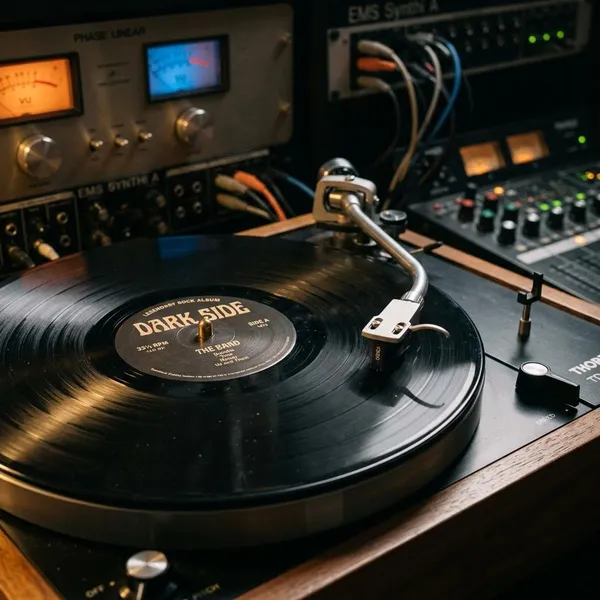
The album's sound comes from the way Pink Floyd combine strong songs with studio detail. Guitars, bass, drums, keyboards, saxophone, synthesizers, tape effects, voices, and silence are arranged so the record feels like one continuous environment.
Linked songs and recurring sounds
The album feels unified because sounds return with purpose. The heartbeat frames the record, spoken voices drift through the mix, and transitions often blur the edge between tracks.
This is where headphones help. On speakers in the background, the album still works as classic rock; with closer listening, the small joins and recurring details make the concept easier to feel.
Synthesizers and tape effects
Synthesizers and tape effects give the album movement and tension. On the Run is the obvious example, but the same mindset shapes the clocks in Time, the cash sounds in Money, and the atmosphere around the quieter passages.
The important point is restraint. The effects are memorable, yet they usually serve a clear emotional job: urgency, dread, momentum, or disorientation.
Spoken voices and wordless vocals
The spoken voices make the album feel strangely intimate, as if ordinary people have been caught thinking out loud. They keep the record human when the production becomes elaborate.
Clare Torry's wordless vocal on The Great Gig in the Sky does something different. It avoids a fixed meaning, which lets the listener bring their own fear, grief, or release to the track.
How was The Dark Side of the Moon made?
The Dark Side of the Moon was shaped through live performance, Abbey Road studio work, and careful mixing. That combination explains why it feels both polished and confident: the band had tested much of the material before giving it its final recorded form.
For listeners comparing it with later concept albums, this is a useful distinction. It was not only planned on paper, and it was not only built in the studio. The final album comes from performance experience plus detailed production choices.
Developing the songs onstage
Pink Floyd worked through early versions of the material live before the album was finished. That allowed the band to hear the sequence as a long piece and adjust pacing, transitions, and mood before recording the definitive version.
This matters because concept albums can easily feel stiff when the idea is stronger than the songs. Here, the live testing helped the structure breathe.
Recording at Abbey Road
Abbey Road gave the band the technical space to turn those songs into a more immersive record. Tape loops, recorded speech, effects, layered parts, and precise engineering choices became part of the storytelling.
The studio work is detailed, but it rarely feels cluttered. A listener does not need to understand recording technology to notice the result: the album sounds spacious, controlled, and unusually clear.
Shaping the final mix
The final mix had to protect both the big moments and the small details. If the clocks, voices, cash sounds, vocals, and instruments had all fought for attention, the album could have become exhausting.
Instead, the mix gives each signature sound a place. That is why the record works in two very different situations: as a focused headphone listen and as an album someone can discover casually before returning for the details.

Conclusion
The Dark Side of the Moon is still the right Pink Floyd album to choose when you want the band's ambition in its most accessible form. Play it in order, give the transitions some attention, and it becomes clear why the record is remembered not only for famous tracks, but for the way those tracks turn pressure, time, money, conflict, and mortality into one complete listening experience.
FAQS
What does the prism cover mean?
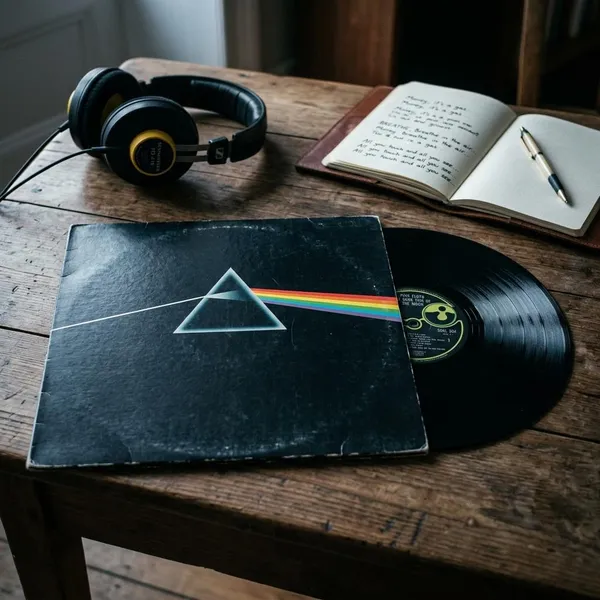
The prism cover is usually understood as light being split into color, which fits the album's mix of clarity and complexity. It is also simple, memorable, and less literal than a cover showing the album's themes directly.
Is the album connected to Syd Barrett?
Yes, but not as a straight biography. Brain Damage is the strongest link for many listeners, while the wider album uses mental strain and instability in a broader human sense.
Is it a good first Pink Floyd album?
Yes. It is usually the safest starting point because it is concise, melodic, atmospheric, and conceptually strong without requiring deep knowledge of the band's history.